
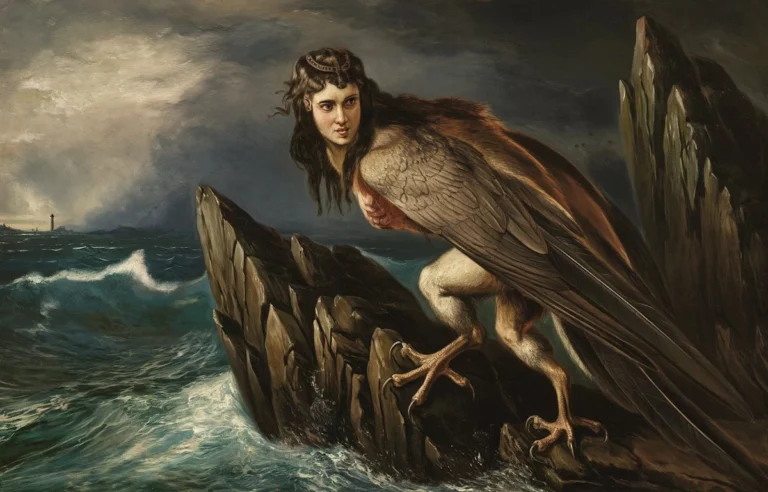
In Greek myth, few creatures are as nasty, noisy, and unforgettable as the Harpies. Their very name hints at trouble. Ancient writers connected “Harpy” either with ereptesthai (“to feed on”) or harpazein (“to snatch away”). Put those ideas together and you get the perfect picture: creatures that steal, foul, and drag things away—sometimes even people—without a trace.
But the Harpies didn’t start out as filthy bird-women haunting sailors and heroes. In the earliest stories, they were something much more subtle: dangerous, yes, but closer to storm winds than to monsters.
From Wind Spirits to Monsters
The Harpies first flutter into Greek literature in Homer, around the late 8th or early 7th century BCE. In the Iliad, they barely appear, but one detail stands out: one of them, Podarge, is said to be the mother of Achilles’ immortal horses by the West Wind. In the Odyssey, they’re mentioned again as mysterious forces that can snatch people away, almost like sudden storms that swallow travelers.
At this stage, the Harpies are more like personified winds—dangerous, unpredictable, but not yet the disgusting predators they later become.
Hesiod’s Theogony, written about a century later, gives us a clearer family tree. The Harpies are daughters of the sea-god Thaumas and Electra, daughter of the Titan Oceanos. That places them firmly inside the cosmic family of gods and forces of nature, not just random monsters.
Hesiod also gives them names and a surprisingly positive description. They are:
- Aello – “stormwind”
- Ocypete – “swiftfoot”
He calls them “lovely-haired,” and emphasizes their incredible speed: they can keep pace with gusts of wind and birds, darting through the air as fast as time itself. In Hesiod, they’re fast, powerful, and dangerous—but not yet foul.
The filth comes later.
support our project
At History Affairs, we believe history belongs to everyone.
Your contribution helps us keep this global archive open, free, and growing — so people everywhere can learn from the past and shape a better future.
Harpies as Instruments of Punishment
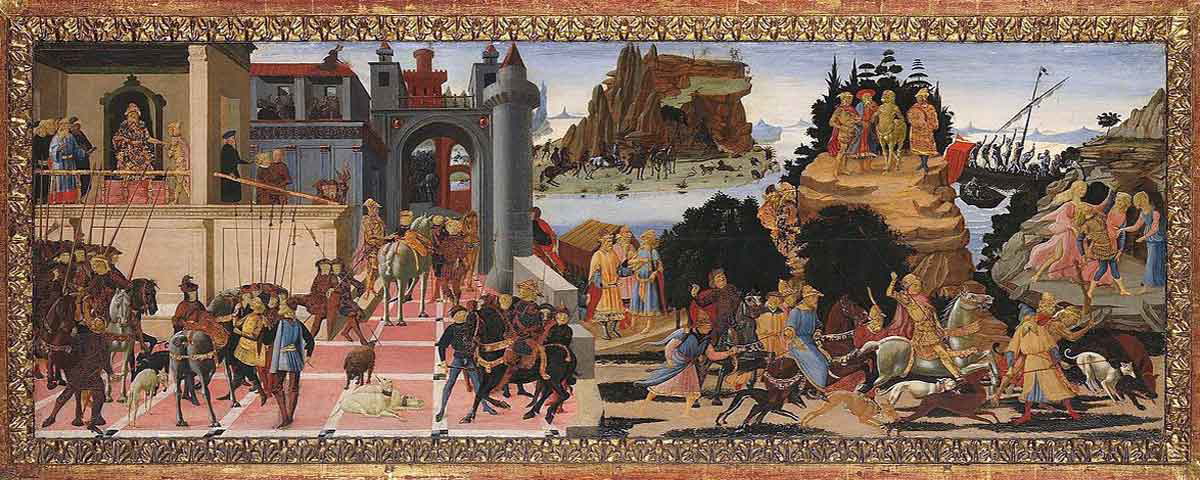
Over time, writers began to lean into the Harpies’ darker side. One important step came with the tragedian Aeschylus in the 6th–5th centuries BCE. He doesn’t tell a full Harpy story, but he links them with divine punishment. They start to become agents of vengeance—creatures the gods can send when they want someone to suffer.
By the Hellenistic and Roman periods, the Harpies are fully developed as instruments of torment. Two major storylines lock in this role: the tale of Phineus and the episode on the Strophades in Virgil’s Aeneid.
Phineus and the Harpies: Prophecy Comes at a Price
In the Argonautica, retold by Apollonius and later by Valerius Flaccus, the Harpies torment a man named Phineus. He’s a seer who uses his prophetic gift to reveal the gods’ secrets too freely, and Zeus decides he’s gone too far.
The punishment is brutal and slow:
- Zeus blinds Phineus.
- Then he sends the Harpies to torment him at every meal.
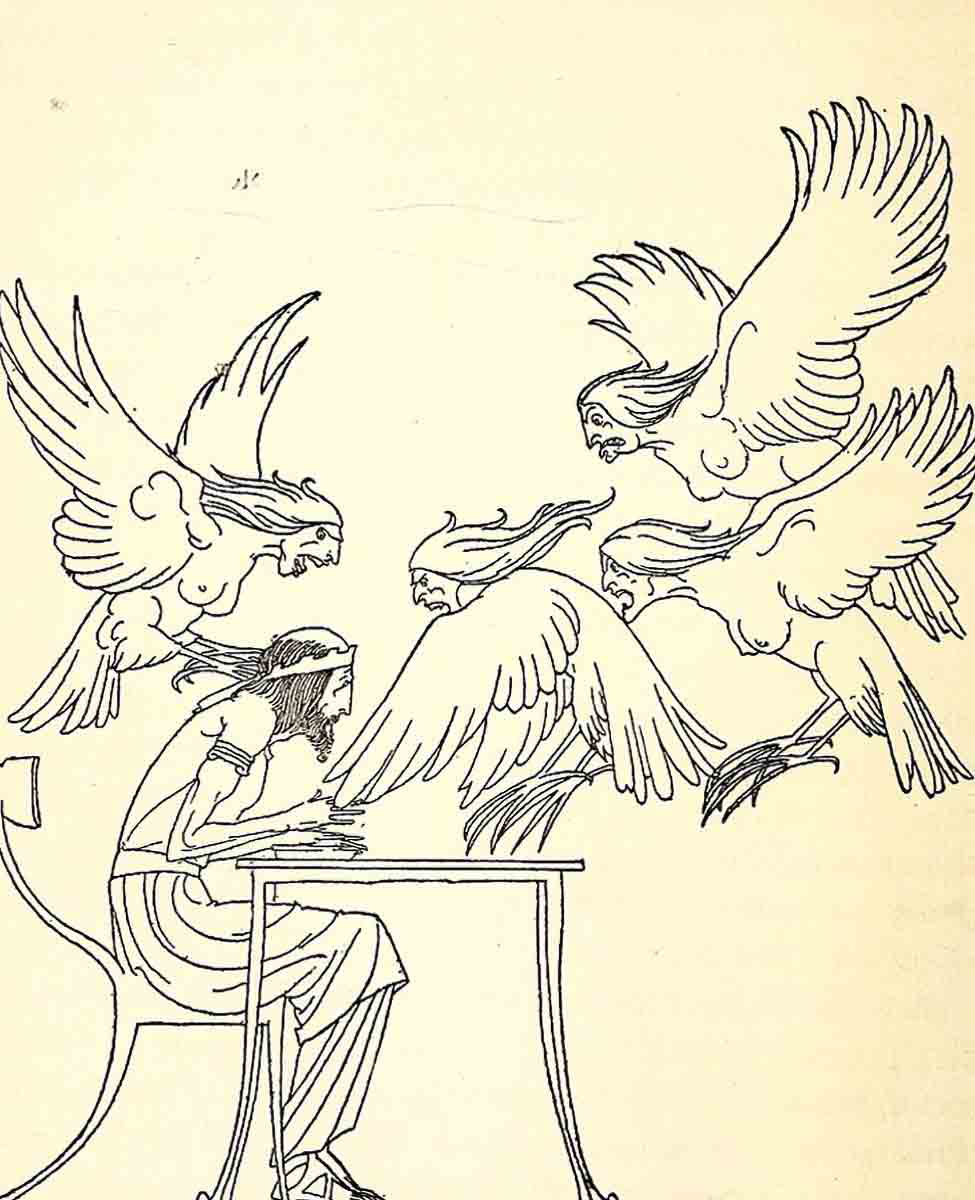
Whenever Phineus sits down to eat, the Harpies swoop in. They either steal his food outright or defile it—sometimes by covering it in filth, sometimes by filling it with a disgusting stench. He never starves completely, but he lives in constant misery, always hungry, never able to enjoy a single bite in peace.
This goes on until Jason and the Argonauts arrive. Among them are Calais and Zetes, winged sons of the North Wind. They feel sorry for Phineus and chase the Harpies across the sky. In Apollonius’ version, the goddess Iris stops them, makes them swear not to kill the Harpies, and promises that Phineus will no longer be harassed. In Valerius’ version, it’s the monster Typho who intervenes.
Either way, the result is the same: the Harpies are driven away, Phineus is finally left alone, and the Argonauts win a powerful ally through their act of compassion.
Aeneas and the Harpies: The Curse of Celaeno
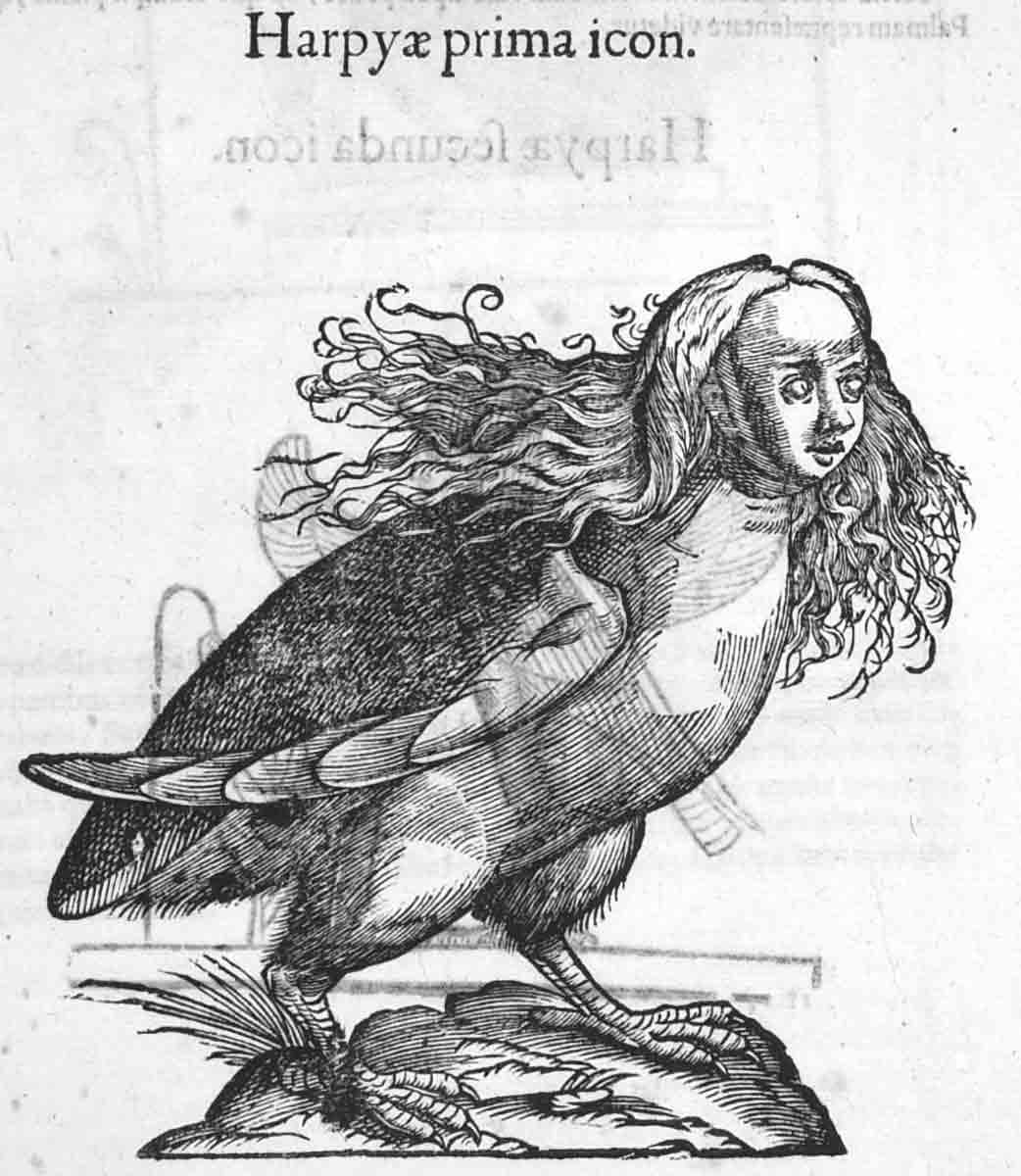
The Harpies show up again in a big way in Virgil’s Aeneid, this time as a warning sign on the Trojan refugees’ journey to Italy.
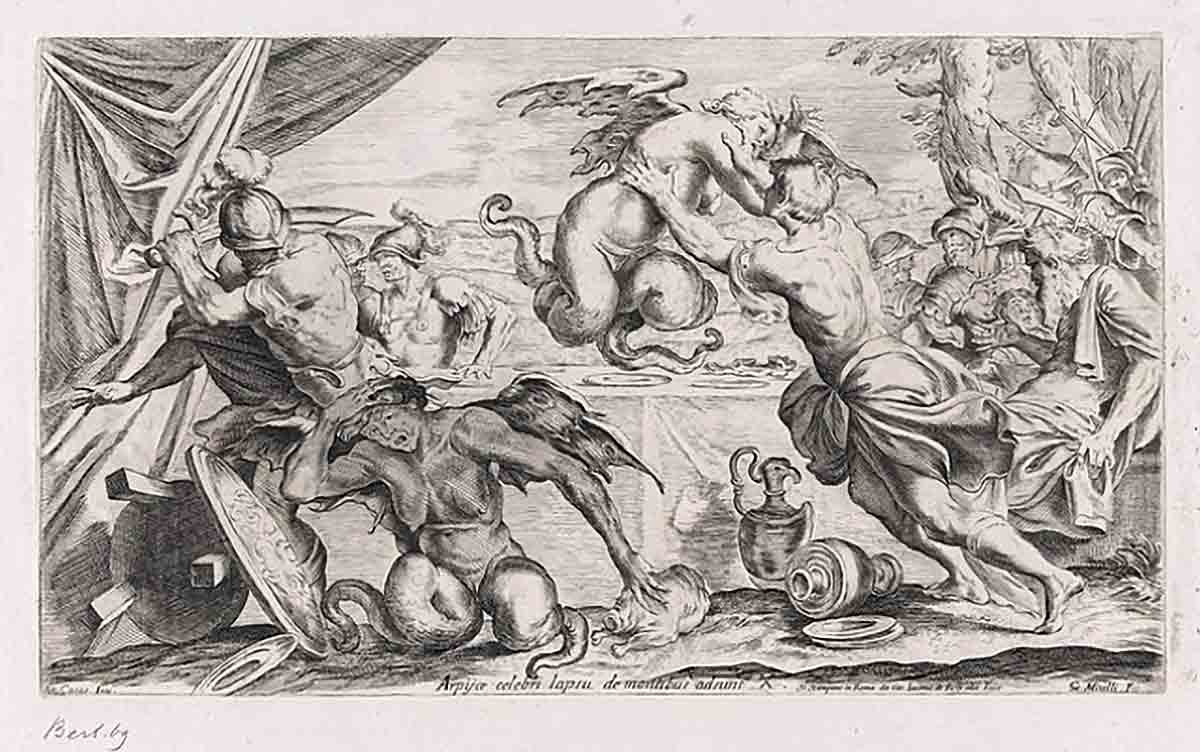
After fleeing Troy, Aeneas and his followers land on the Strophades islands. They see herds of cattle grazing freely and assume the gods are finally smiling on them. They slaughter the animals and prepare a feast.
Then the Harpies strike.
They swoop down and ruin everything—snatching food, fouling what’s left, and smearing it with filth. When the Trojans try to fight back, their arrows and swords are useless. The lead Harpy, Celaeno, hovers above them and delivers a chilling prophecy:
Yes, you will reach Italy, she says, but you will be so hungry that you will “devour your very tables” before your suffering ends.
Shaken and disgusted, Aeneas and his men quickly offer sacrifices to try to calm the “foul birds,” then flee the islands. The Harpies here are more than just pests—they’re omens, carriers of divine anger and future disaster.
What Harpies Look (and Smell) Like
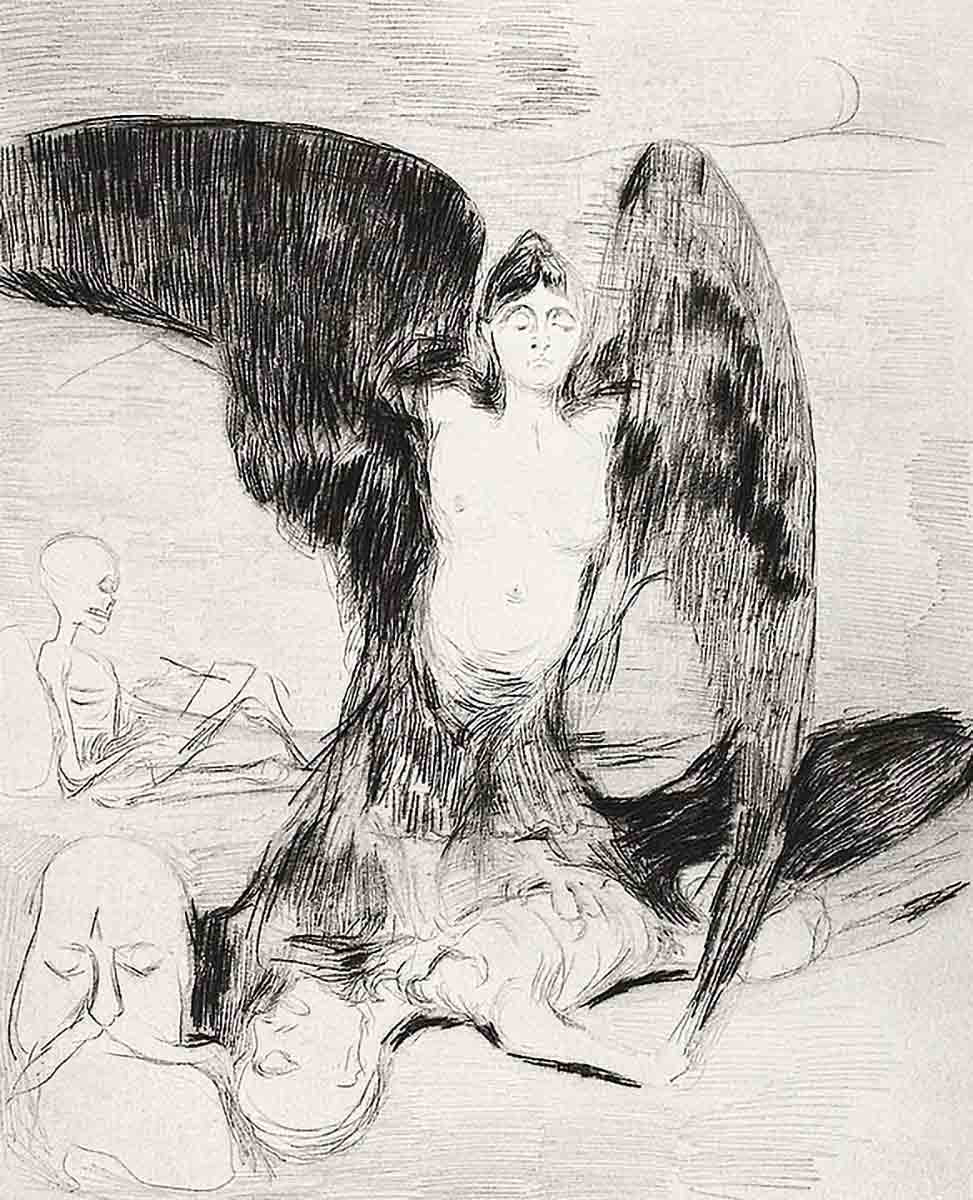
As the centuries pass, writers turn the Harpies into something truly revolting.
They are usually described as:
- Bird-like creatures with women’s faces or upper bodies
- Equipped with crooked beaks and powerful wings
- Surrounded by a horrible stench and constant screeching
Apollonius tells us that they dive with a terrifying yell and repeat that scream as they tear into their victim’s food. Valerius Flaccus doubles down on the disgust: when the Harpies arrive, the air fills with a “rank smell,” and their very presence causes revulsion. They leave behind a “filthy stream” on anything they touch.
Virgil takes this to the next level, describing them as “foul” creatures with filth oozing from their bellies, spreading a “rank stench” wherever they go. Their attacks are a full sensory assault: sight, sound, and smell all combine into a scene meant to make the audience shudder.
On top of that, their speed and suddenness add another layer of fear. In the Odyssey, Telemachus and Penelope invoke the Harpies to describe the dread of someone vanishing without explanation—snatched away by unseen forces, like a person caught in a sudden storm and never seen again.
More reading



Harpies, Vultures, and “Monstrous Femininity”
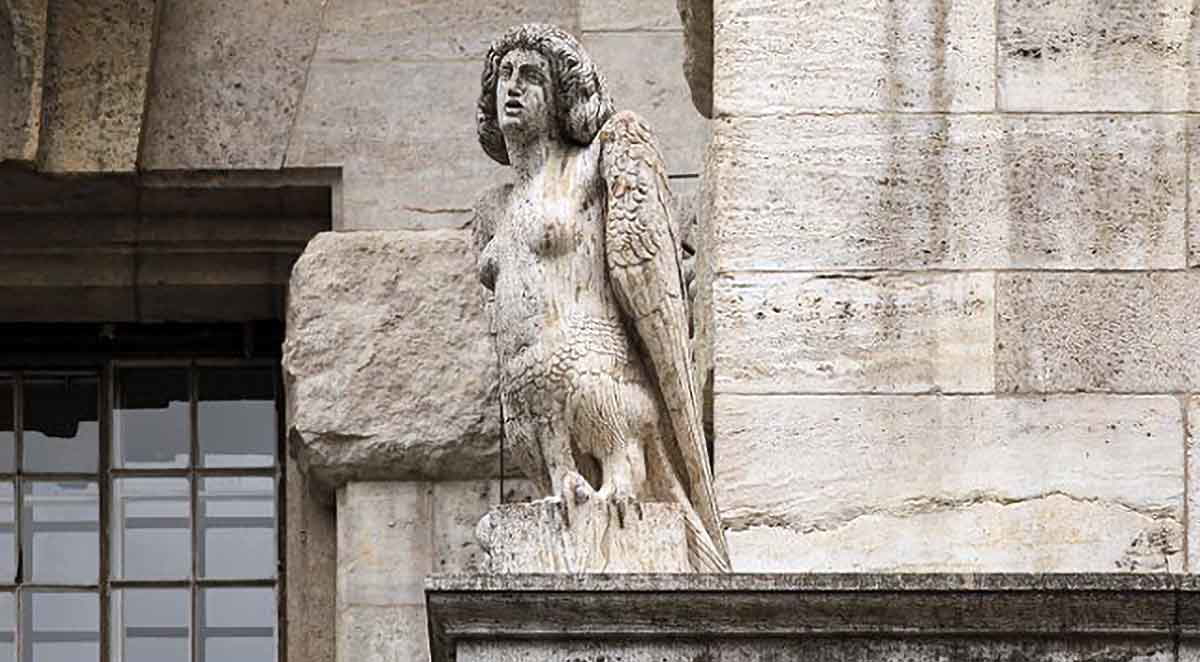
Modern scholars often connect the Harpies’ behavior with real-world carrion birds like vultures:
- They swoop in and steal food.
- They feast on decaying bodies.
- They are associated with death, disease, and bad omens.
The Harpies take those associations and push them into mythic extremes: they don’t just eat the dead; they dishonor the living by ruining their food and haunting their tables.
Their female forms add another layer of meaning. In some interpretations, Harpies embody what scholars call “monstrous femininity.” The “filthy stream” they leave behind has been read as a euphemism for menstrual blood, tying them to ancient notions of female “uncleanness” and danger.
In that sense, they stand alongside the Sirens, another set of birdlike women from Greek myth. While Sirens tempt and entice, Harpies disgust and defile. Together, they reflect different aspects of male anxiety about female power, sexuality, and bodily processes.
From Myth to Language, Literature, and Stone
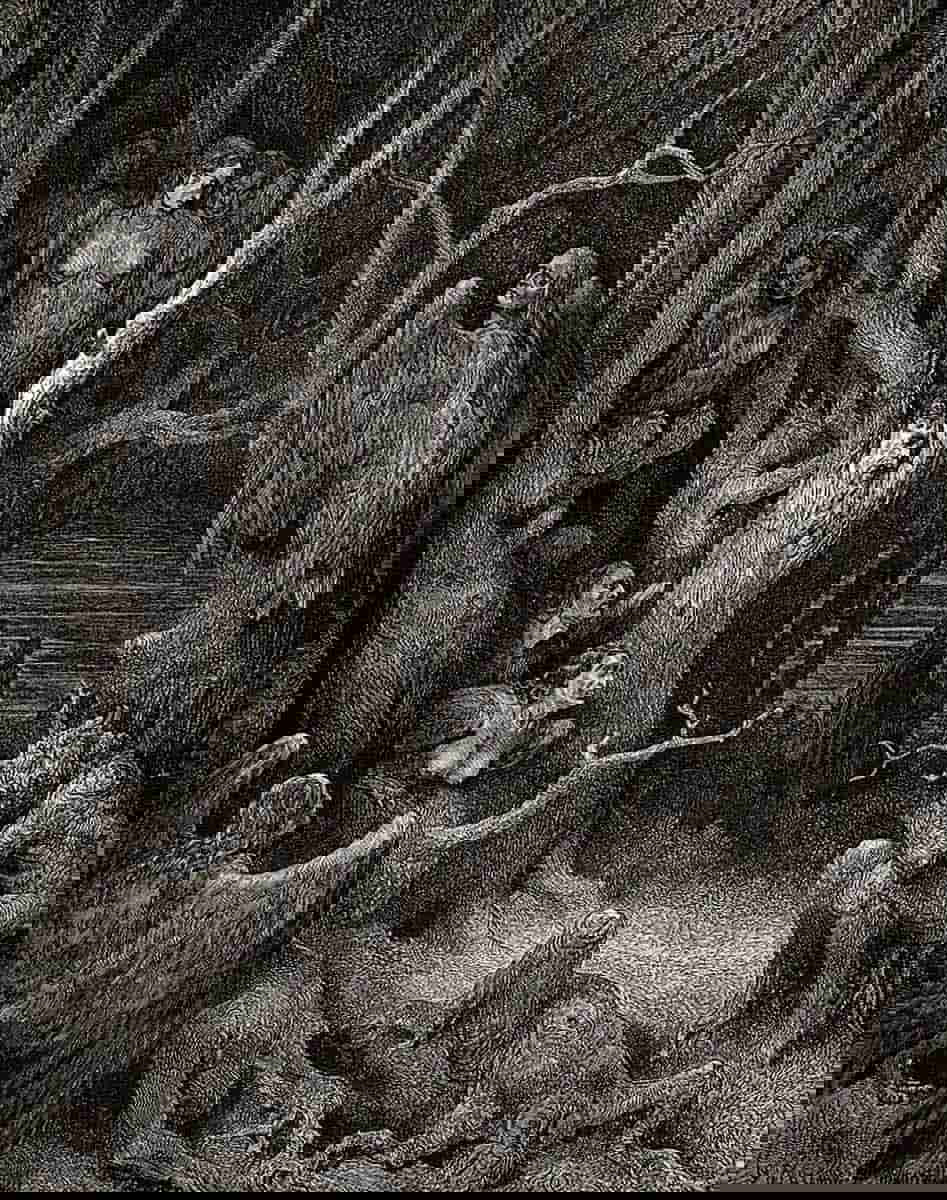
The Harpies didn’t vanish with the end of ancient pagan religion. Their image and name survived and evolved.
- In Shakespeare’s Much Ado About Nothing, the character Benedick calls Beatrice a “harpy” when he’s angry with her, using the word to mean a devious, unpleasant woman.
- In Dante’s Inferno, Harpies appear in the Forest of Suicides in the seventh ring of Hell, perching in twisted trees and adding to the atmosphere of horror and despair.
- In medieval and Renaissance art and heraldry, Harpies become popular emblems. They appear on coats of arms in various German cities and principalities, sometimes clearly female, sometimes oddly gender-ambiguous or even male.
Their close resemblance to Sirens in art can make them hard to distinguish. Often, the only clues are inscriptions or the narrative context—Phineus’ torment points to Harpies, for example, while a seaside rock luring sailors usually signals Sirens.
Despite all the variation, one core idea stays the same: Harpies are creatures of dread and disgust, messengers of divine anger, and symbols of what happens when the gods—or fate—decide to make someone’s life a living nightmare.
From swift, “lovely-haired” wind spirits to filthy, shrieking bird-women, the Harpies trace a fascinating arc through Greek and Roman imagination. Their legacy in language, literature, heraldry, and art shows just how powerful that image of airborne, inescapable punishment can be—and why, even today, calling someone a “harpy” still stings.

support our project
At History Affairs, we believe history belongs to everyone.
donateYour contribution helps us keep this global archive open, free, and growing — so people everywhere can learn from the past and shape a better future.
know the present
Defense Tech Needs the State, Not Less of It
Trump Era or The New Imperial Age
America First, Venezuela, and the Trap of Old Habits
Why the AI Race Has No Winner
reading more
The Sophists, Socrates, and the Quest for Moral Clarity
5 Uncanny Coincidences in U.S. History
A Review of Perry Anderson’s Disputing Disaster
Versailles: From Hunting Lodge to World Icon
Arabia Felix: Exploring Ancient Hadramawt and the Port of Qana
Monasticism and the Early Church: Devotion, Expansion, and Daily Life
North African Campaign: Fire on the Desert
Pope Leo X Who Helped Ignite the Reformation
Why the Battle of Hastings (1066) Mattered
The Fourth-Century Church: Doctrine, Organization, and the Patristic Legacy
Roman Senate: Backbone —and Burden—of a World-Conquering Republic
A Short History of Tobacco