
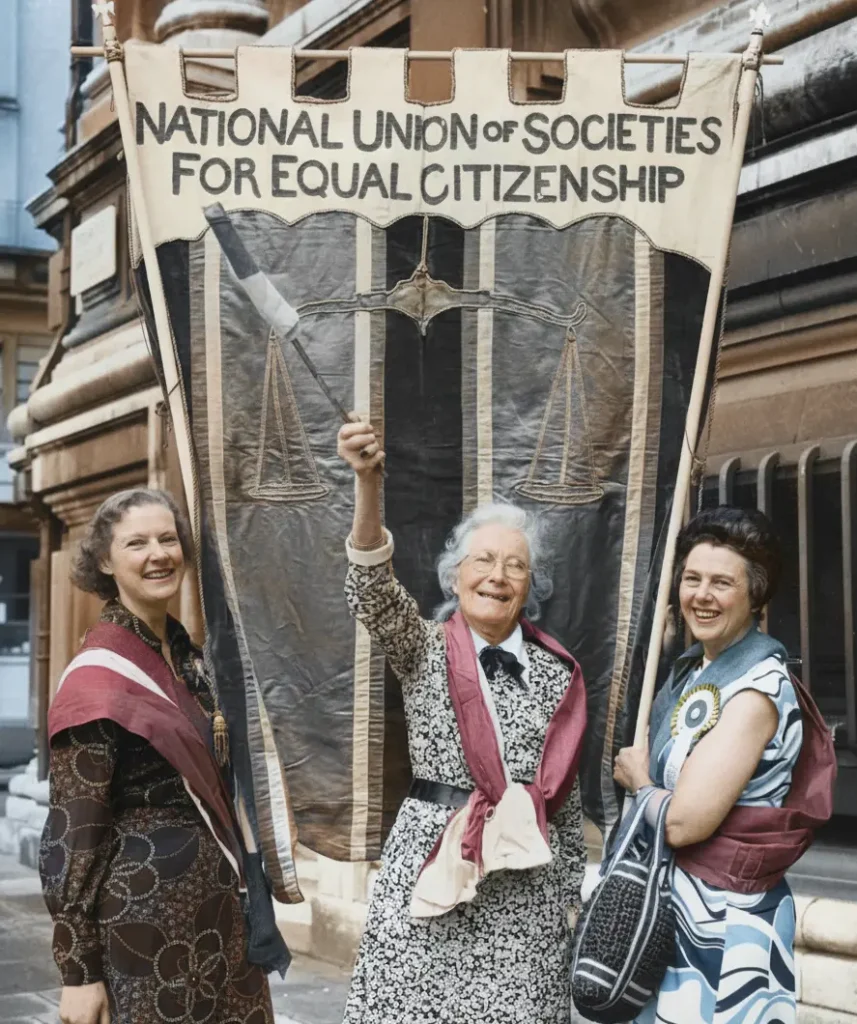
In 1968, Britain marked 50 years since some women first won the vote. It should have felt like a victory lap. Instead, for a lot of women, it landed like a question: Is this it? The pay gap was still normal. Jobs were still “men’s work.” And if you were a woman trying to move up, you often hit a wall that wasn’t even pretending to be fair.
For Joyce Butler, a Labour and Co-operative MP for Wood Green, that anniversary triggered what she later called a feeling of “unfinished business.” She already had a track record: she’d fought hard for nationwide cervical cancer screening. But the next battle—sex discrimination—didn’t begin with a grand speech or a manifesto line.
It began with a bus.
The bus conductor who couldn’t become an inspector
Butler heard about a woman working as a bus conductor who wanted to become a bus inspector. Simple career ambition. Except she was blocked by a quiet, deadly piece of workplace logic:
To qualify, she needed experience.
To get experience, she needed to drive.
But her employer didn’t hire women as bus drivers.
So she couldn’t train for the job she wanted because she couldn’t access the stepping-stone job she needed. Not because she wasn’t capable—because the system had locked the door.
Butler described the realisation like a sudden flash: job-and-training discrimination wasn’t a side issue. It was the mechanism that kept women from advancing, year after year, generation after generation.
And she immediately saw the obvious comparison. Britain already had race discrimination legislation. Why was discrimination against women treated like a personal problem women should simply “overcome”?
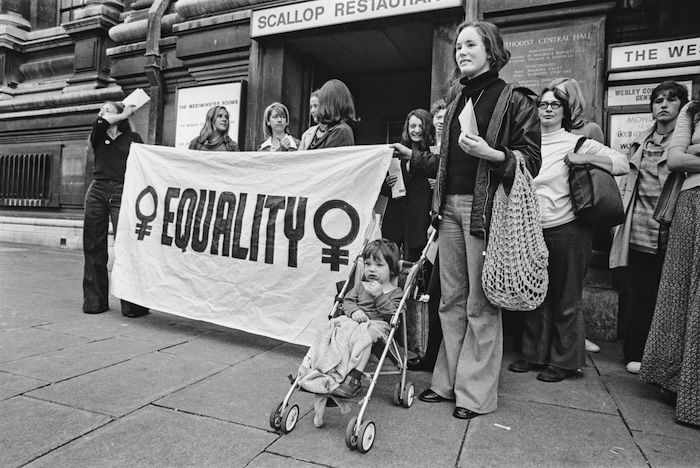
“Women themselves could improve it” — and why Butler refused that answer
At first, the Labour government under Harold Wilson didn’t want to go there. Wilson’s line was basically: things could improve if women took on responsibility when it was offered.
But Butler had a sharper response: responsibility doesn’t matter if opportunity is filtered, delayed, or denied. You can’t “lean in” to a job you’re barred from training for.
She looked at the Race Relations Act 1965, which had created a board for complaints. If the state could recognise and process unfair treatment in one area, why not in another? Why should women’s inequality be treated as a private inconvenience instead of a public injustice?
So she started pushing for a law.
Ten minutes to change the country
Here’s the brutal part: Butler didn’t have government backing. That meant she couldn’t bring a full-scale government bill. What she could do was introduce a bill under the Ten Minute Rule—a parliamentary route that gives an MP ten minutes to make the case.
Ten minutes is enough to make noise. It’s not enough to pass a major reform through a hostile system.
But Butler understood something important: even if the bill was unlikely to become law right away, it could become a signal flare. A focus point. A way to make the discrimination visible—and measurable.
She gathered cross-party support from female MPs. The press noticed. And then something else happened: letters began to arrive.
The letters that turned a bill into a movement
Women wrote from across the country, and you can feel the emotional charge in what they sent. Some were cheering Butler on, basically saying: Finally, someone’s naming this.
Others were furious—and tired.
One woman looked back to the suffragettes and warned that modern women were “letting the team down” if they accepted a second-class life as normal. Another wrote about equal pay not as a slogan, but as something painfully concrete.
An 85-year-old toilet attendant, working since 1933, described doing far more work than men while being treated as worth less. Others focused on training and long-term careers—how employers refused to invest in women because they assumed marriage would “interrupt” everything, so training them would be “a waste.”
One woman wrote on behalf of working women across public services—postwomen, bus conductresses, underground workers—arguing that women’s jobs were always framed as temporary, as if a woman’s real purpose was to be passing through work on the way to something else.
That’s what made Butler’s campaign powerful. It didn’t only represent one group of women. It became a container for many experiences:
- young graduates shut out of career ladders
- working women paid less for the same effort
- wives abandoned without maintenance
- older women harmed by “marriage bars” that had forced them out of civil service or teaching
- widows who couldn’t support themselves later because the system had never allowed them to build security
Discrimination turned out to be one of the few things that could unify women across class and generation—because it didn’t discriminate about who it punished.
“She introduced it every year” — and built pressure the hard way
Butler kept bringing the legislation back year after year. Each time it failed, the campaign got larger.
Support came from major organisations like the National Council of Women and the Women’s International League for Peace and Freedom. Butler also dug into discrimination inside the civil service, finding that women were still barred from work labelled “unsuitable”—in places you wouldn’t even expect, like immigration services, agriculture, and museums.
By 1971, the wider women’s liberation movement started to pick up the bill as a cause. Groups like Women in Media pushed it in the press, and support letters came from all over—from Bristol to Fife.
Still, Parliament knocked it back.
So the campaign adapted.
New allies, new routes, and parties forced into promises
In 1972, Butler asked Willie Hamilton (MP for West Fife) to take the bill forward because he’d secured a strong position in the ballot for private members’ bills—meaning it would finally get real parliamentary time.
Meanwhile, Baroness Seear introduced similar proposals in the House of Lords, betting that the Lords might be more receptive to anti-discrimination measures in education and employment.
Outside Westminster, the political pressure kept rising. By 1974, all three major parties pledged action in their manifestos. And in October that year, Una Kroll—a doctor and feminist activist—stood as an independent anti-sex discrimination candidate (unsuccessfully, but loudly), backed by Women in Media.
At that point, the issue had shifted. It wasn’t just Butler’s mission anymore. It was becoming politically costly not to act.
1975: The law arrives — alongside equal pay and maternity protection
In early 1975, the Labour government introduced a Sex Discrimination Bill through the Home Secretary Roy Jenkins. By the end of the year, it became law as the Sex Discrimination Act 1975.
And the timing mattered. That same year:
- the Equal Pay Act 1970 finally came fully into force (after a five-year lead-in for employers)
- the Employment Protection Act 1975 introduced key protections, including maternity leave and safeguards against dismissal for pregnancy
The Sex Discrimination Act outlawed discrimination based on sex or marriage across:
- employment
- education
- goods and services
It also created the Equal Opportunities Commission, tasked with enforcing the law and pushing equality forward.
A landmark law—with obvious holes
Even at the moment of victory, people could see the limits.
The Act didn’t touch pensions or taxation. Some bodies were exempt, including the armed forces and the Church of England. And the law focused heavily on treating women “the same” as men—without fully grappling with realities like pregnancy or harassment, where “sameness” doesn’t map neatly onto lived experience.
The Equal Opportunities Commission was often criticised for being cautious. But it still became a tool activists could use—and they did.
One of the famous fights that followed was Gill and Coote v El Vino Co Ltd, challenging a bar policy that refused to serve women unless they sat in the back—an early legal push against discrimination dressed up as “chivalry.”
Butler after the Act: the “National Woman’s MP”
Joyce Butler didn’t stop after 1975. She worked on equality issues in taxation and pensions, advised the Department of Employment, and kept pushing for better political representation for women. When she retired from the Commons in 1979, women’s organisations sent tributes.
One veteran feminist leader called her the “National Woman’s MP.”
It’s an earned title—not because she was perfect, but because she was stubborn in the most useful way: she kept returning to the same locked door until the lock finally snapped.
And it all started with a single, everyday injustice—the kind you could miss if you weren’t paying attention:
A woman who wanted to move up at work…
but wasn’t allowed to learn the skills needed to do it.

support our project
At History Affairs, we believe history belongs to everyone.
donateYour contribution helps us keep this global archive open, free, and growing — so people everywhere can learn from the past and shape a better future.
know the present
Defense Tech Needs the State, Not Less of It
Trump Era or The New Imperial Age
America First, Venezuela, and the Trap of Old Habits
Why the AI Race Has No Winner
reading more
The Forgotten Woman Who Restored the British Monarchy
Debunking the Neanderthal Myth: Separating Fact from Fiction
Are the Speeches in Thucydides’ History Authentic or Invention?
Constantine and the Christian Empire
Jesus’ Ministry and the Genesis of the Early Church
The Battle of Kursk in World War II
Who Were the Edomites? The Long Rivalry Between Israel and Edom
The Nazi-Soviet Pact: A Deal with the Devil
Nicaragua’s Sandinista Revolution
Joan of Arc’s Trial and Execution
The Incredible Inca Messengers: How Runners Connected an Empire
Andrew Jackson: A Legacy of Native American Oppression