

The katana gets most of the spotlight when people talk about curved swords. It’s iconic, it’s effective, and it served Japanese warriors for centuries. But once you step outside Japan, you discover an entire world of equally fascinating curved blades — each shaped by its own culture, battlefield, and fighting style.
Let’s leave Japan for a moment and travel across Eurasia to meet some of the katana’s distant cousins: curved, single-edged swords from China, India, Persia, the Ottoman Empire, medieval Europe, and the high seas.
The Changdao & Miaodao – China’s Two-Handed Cutters
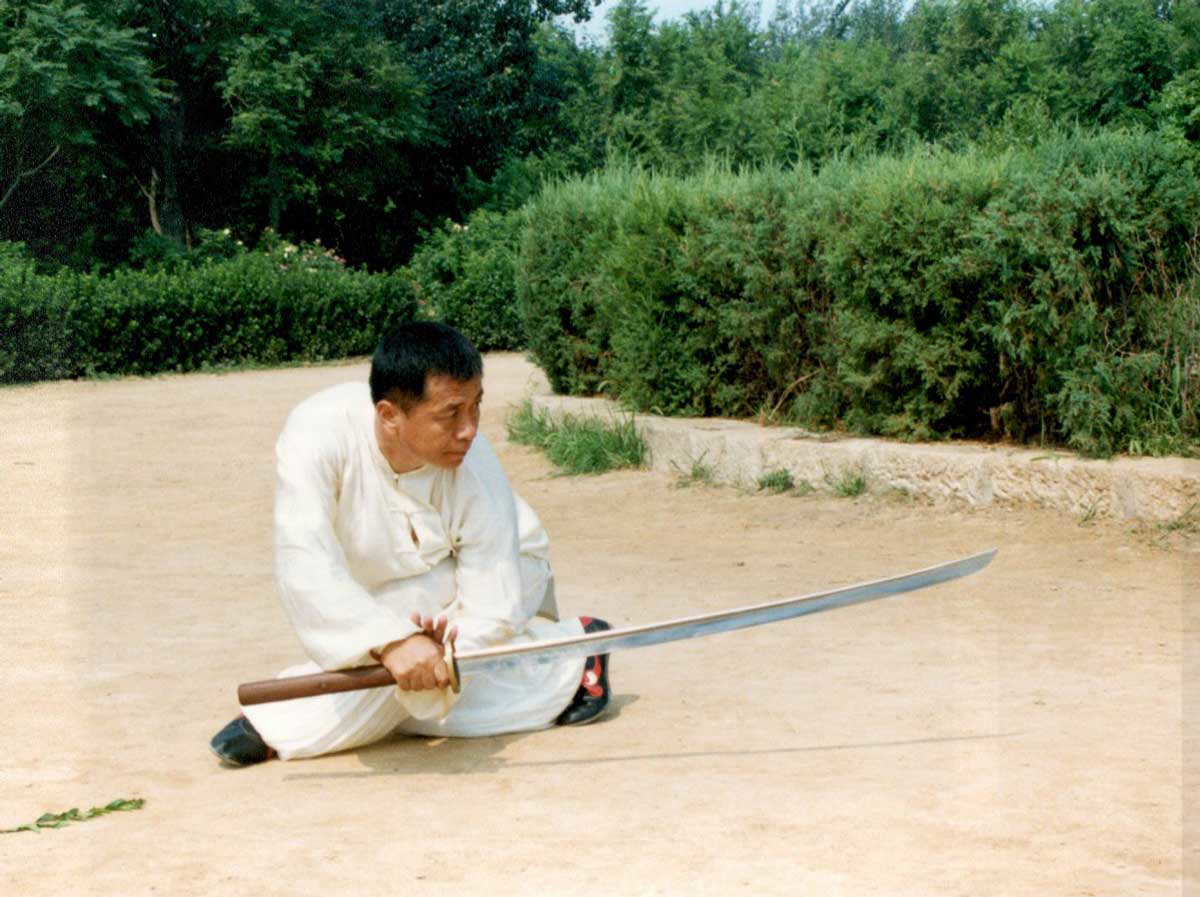
In Chinese martial culture, the dao is the classic single-edged cutting sword. Most dao are one-handed, but there’s a long, two-handed outlier: the changdao.
Visually, the changdao can look uncannily like a katana: long, slightly curved, and meant for powerful two-handed cuts. In fact, at a glance many people might confuse the two. That resemblance isn’t an accident. Japanese swords were exported and traded around East and Southeast Asia, and Chinese smiths and soldiers likely studied these foreign blades, adapting what worked.
Historically, the changdao first appears in the Tang Dynasty as a large anti-cavalry sword. It went out of fashion under the Yuan, then returned during the Ming Dynasty, where it saw action against wokou — Japanese pirates, many of them masterless samurai turned raiders.
In the early 20th century, when China experienced a surge of nationalism and martial arts training, the military revived traditional weapons. The changdao evolved into the miaodao, a modernized two-handed saber still practiced in some Chinese martial arts today.
The Talwar – India’s Razor-Curved Cutter
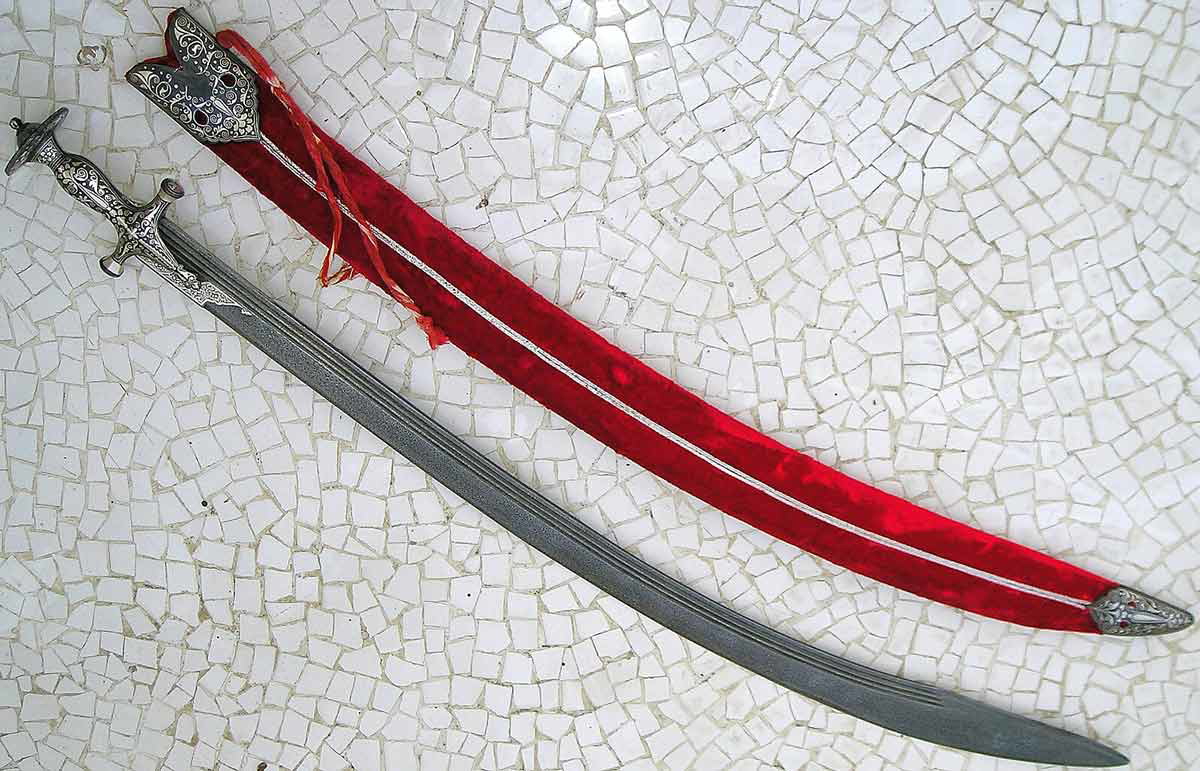
From the plains of India comes the talwar (also spelled tulwar), a sword of the Mughal era that roughly overlaps with Japan’s Edo period.
The talwar has a deeper curve than a katana, and that curvature shapes everything about how it’s used. This is not a thrusting sword. It shines in draw cuts — slicing motions where the blade is pulled across the target as it hits, turning speed and curve into devastating cutting power.
Key features:
- Single-handed grip with an intricately shaped hilt that locks into the hand when held correctly.
- A blade that widens toward the tip, adding momentum and impact in the cut.
- Often a false edge near the tip on the back of the blade to allow for backhand cutting techniques.
- A metal hilt and disc-shaped pommel, which help balance the blade and force the user to maintain a strong cutting angle. Some pommels even have a small spike, turning the grip itself into a weapon for close-range strikes.
The talwar is a reminder that a curved sword can be a precision tool, not just a hacking weapon.
The Shamshir – Persia’s “Lion’s Fang”
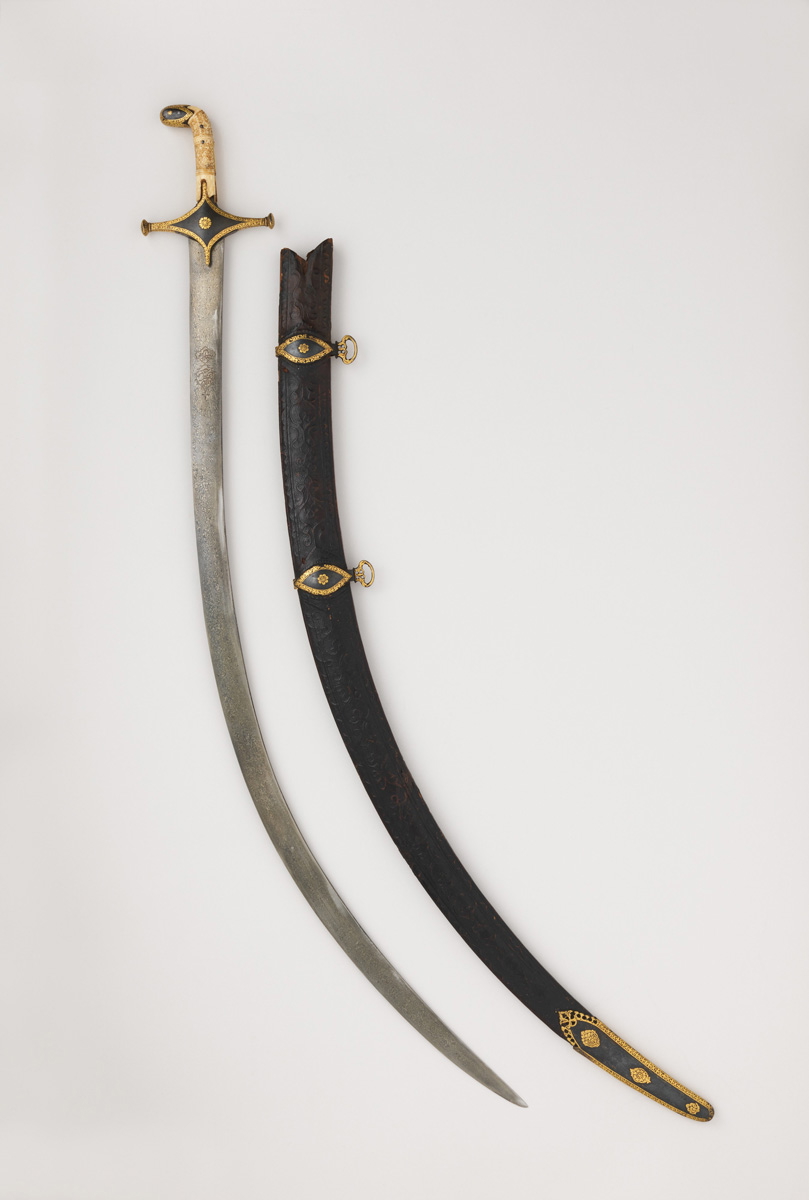
The shamshir is one of the most elegant curved swords ever made. Its name literally means “curved like a lion’s fang,” and the blade lives up to that image.
Think of a blade with an even more pronounced curve than the talwar — almost like a crescent. This shape makes the shamshir perfect for slashing attacks, especially from horseback. The sword is single-handed, with a characteristic hooked pommel that helps riders keep their grip while galloping and striking.
The shamshir took shape around the 13th century, likely influenced by Turko-Mongol sabers. Thanks to trade and warfare across the Silk Road, its design spread widely and influenced other regional swords such as the saif, pulwar, and even the Indian talwar.
In Europe, Crusaders and later travelers encountered it in the hands of “Saracen” warriors. Over time, Western languages mashed different Middle Eastern curved swords together under one label: the “scimitar.” Technically, that’s inaccurate — “shamshir” is a specific Persian type, not a catch-all term — but the image stuck.
The Yataghan – The Ottoman “War Machete”
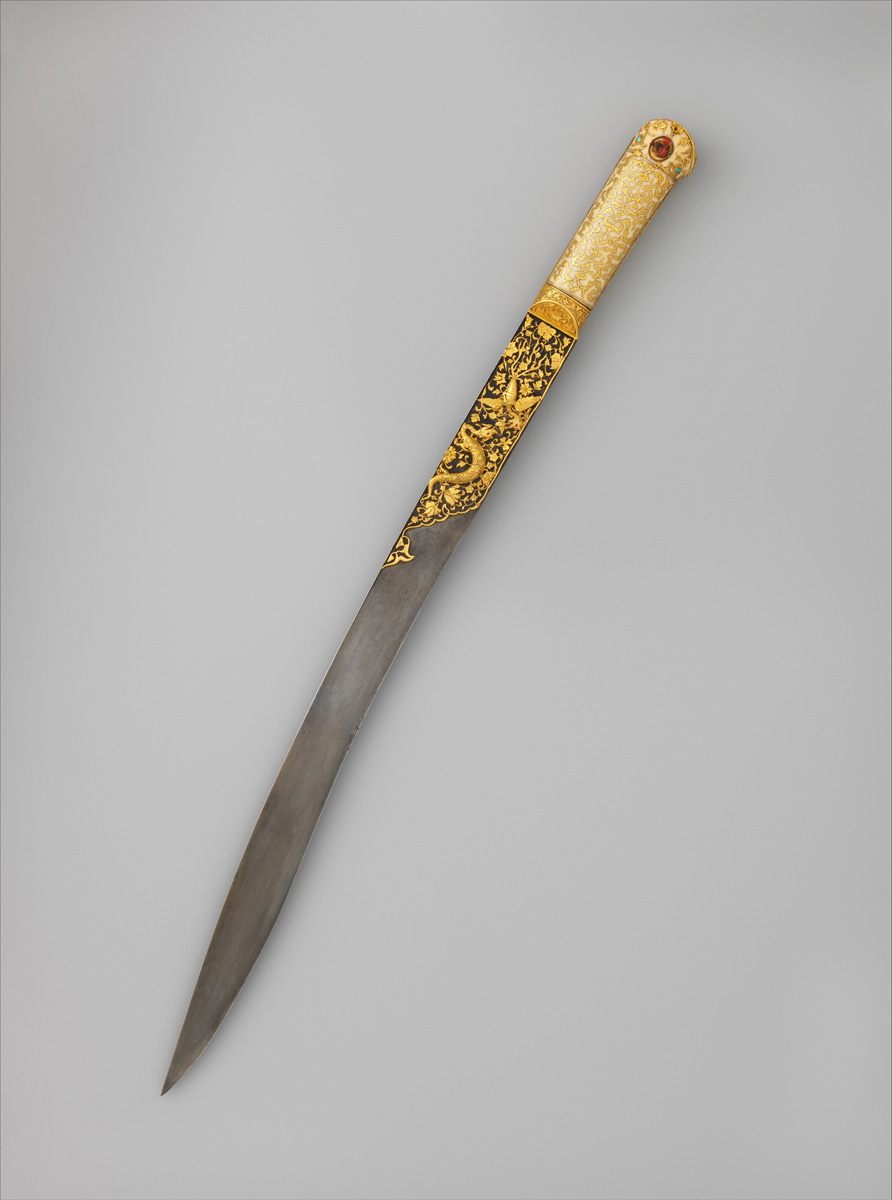
Next, we move to the Ottoman Empire and the yataghan, a one-handed sword that looks almost like a cross between a machete and a fantasy weapon.
Unlike the smooth, consistent curve of a shamshir, the yataghan often features a forward curve, giving it excellent chopping power. Some versions have a dramatic S-shaped blade, curving forward near the hilt and back again near the tip. This unusual shape isn’t just for show — it can be used to:
- Deliver powerful hewing blows
- Hook an opponent’s weapon
- Slip past a guard and attack from unexpected angles
Most yataghan swords lack a handguard, allowing the wielder more wrist freedom. Because it was meant to be used with a shield or armor, the shield took over much of the defensive role.
Originally believed to be derived from large working knives, the yataghan eventually became the standard sidearm of the Janissaries, the elite infantry of the Ottoman sultans. Their primary weapons might be early firearms, but at close range, the yataghan finished the job.
The Messer & Kriegsmesser – Germany’s “War Knives”
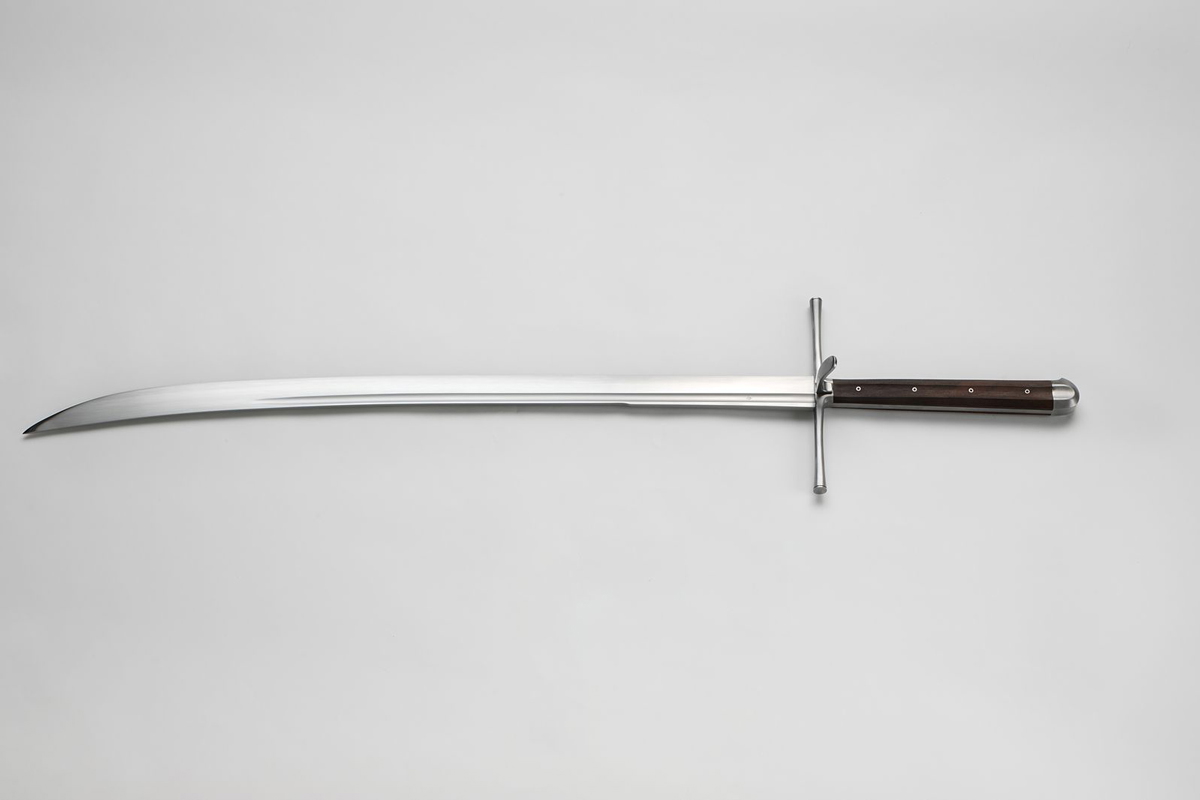
In medieval Germany, the straight double-edged longsword gets most of the fame, but the messer family is just as interesting — and often curved enough to sit beside other single-edged blades.
The messer (“knife”) is a single-edged, single-handed sword with:
- A full-width tang running the entire length of the handle
- A crossguard, plus a distinctive side bar called a nagel that juts out to protect the knuckles
- Frequent pairing with a buckler shield in the off-hand
There’s a popular myth that messers were legal loopholes — “not quite swords,” so peasants could carry them despite bans. In reality, it’s more likely that knife-making guilds exploited legal definitions to compete with swordsmiths: if the tang was fully visible, it counted as a “knife,” not a “sword.”
Scale the messer up, and you get the kriegsmesser (“war knife”), essentially a two-handed messer-length sword. These larger versions were genuine military weapons, used by Landsknecht mercenaries in the 15th and 16th centuries. Many techniques from longsword fencing translate directly to the kriegsmesser, making it a kind of hybrid between knife and sword traditions.
The Falchion – Europe’s Single-Edged Workhorse
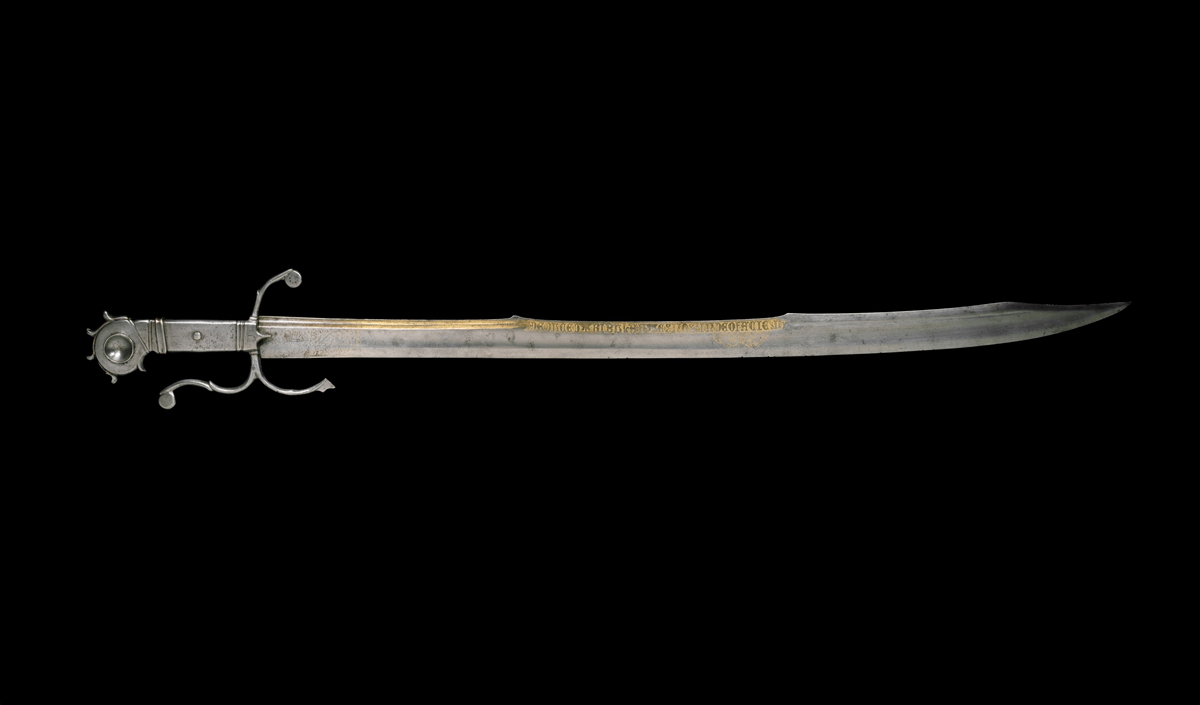
From medieval France (and later across Europe) comes the falchion, a single-edged sword that bridges the gap between a cleaver and a saber.
The falchion:
- Is typically single-handed
- Has a wider blade near the tip, especially in early designs, giving it chopping power
- Often features a short false edge near the point for extra cutting versatility
Early falchions can look almost like oversized butcher knives. Later examples are slimmer and more refined, with points narrow enough to slip between rings of mail armor.
Falchions were popular with light cavalry and also among infantry who couldn’t afford larger, more prestigious swords. In feudal societies, soldiers were expected to buy their own equipment, so cost mattered.
Despite being frequently depicted in medieval art, relatively few real falchions survive, which only adds to their mystique.
The Cutlass – The Sailor’s Blade
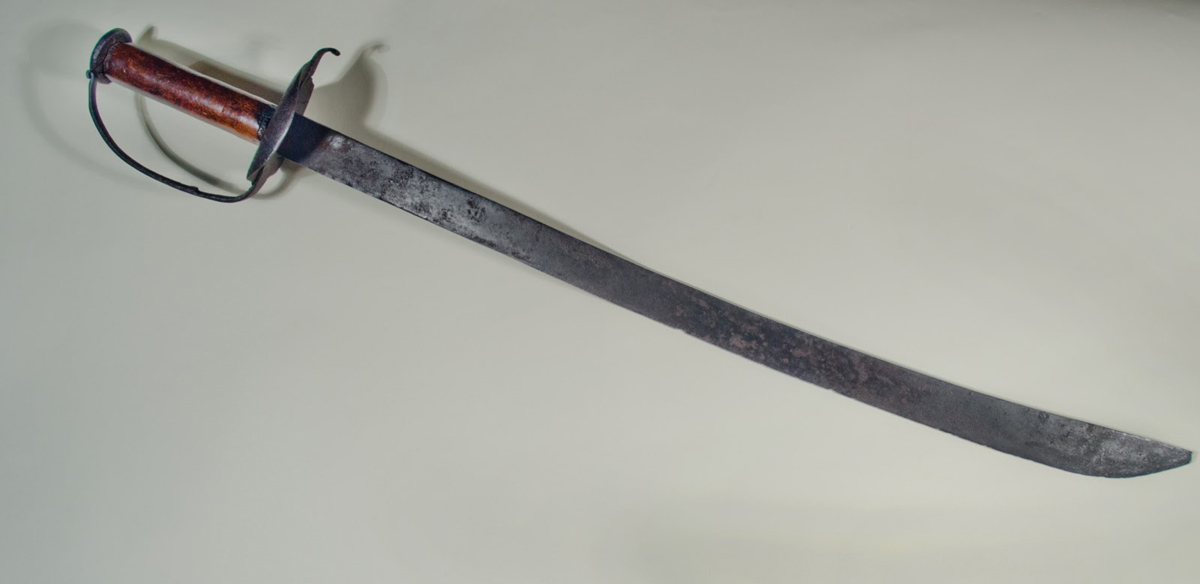
Step aboard a 17th–18th century European ship, and you’ll likely find the cutlass at work.
Short, broad, and curved, the cutlass was perfect for:
- Fighting in tight, crowded spaces on deck or below
- Boarding actions, where speed and maneuverability mattered more than reach
- Cutting through rope, canvas, and vegetation — making it as much a tool as a weapon
The cutlass usually featured a sturdy handguard that wrapped around the knuckles, crucial when the deck was pitching, blood and seawater made surfaces slick, and one slip might send your sword overboard.
Its design draws on earlier European single-edged blades like the falchion and messer. Over time, the functional, utility-focused side of the cutlass helped inspire the familiar machete, still used today for work in forests and fields.
Why No Pre-Columbian Metal Swords in the Americas?
You might notice that this list sticks to Eurasia and nearby regions. That’s not because pre-Columbian American civilizations were primitive — far from it. Cultures like the Maya, Aztec, and Inca built sophisticated cities, political systems, and trade networks.
However, they did not develop ironworking in the same way Eurasia did. They lacked ready access to coal and other resources needed to reach the high temperatures required to smelt and work large quantities of iron for weapons. Instead, they used other materials — like obsidian and bronze — which were more than adequate for their needs.
Only after European contact did metal swords and similar weapons spread widely in the Americas.
Curved swords tell a story not just of warfare, but of geography, technology, and culture. From the lion’s-fang arc of the Persian shamshir to the brutal chop of the yataghan and the shipboard practicality of the cutlass, each blade reflects the world that forged it.
The katana is legendary, yes — but it’s part of a much bigger family.

support our project
At History Affairs, we believe history belongs to everyone.
donateYour contribution helps us keep this global archive open, free, and growing — so people everywhere can learn from the past and shape a better future.
know the present
Defense Tech Needs the State, Not Less of It
Trump Era or The New Imperial Age
America First, Venezuela, and the Trap of Old Habits
Why the AI Race Has No Winner
reading more
The Fourth-Century Church: Doctrine, Organization, and the Patristic Legacy
Pope Alexander VI and the Scandalous Borgia Legacy
A Surprising, Long History of Veterinary Medicine
Did King Arthur Really Invade Europe?
379/8 BC: A Year of Intrigue and Shifting Alliances in Ancient Greece
Stalingrad Winter of Valor and Despair
Liberation Theology and the Shockwaves Through Latin America
Joan of Arc’s Trial and Execution
Absinthe: From Green Fairy to Moral Panic
Hopes, Fears, and the Stars: Exploring Early Modern Astrology
🎧 Sun Records: A Jukebox Revolution Forged in Memphis
Alexander’s Forgotten Challenge in the Persian Gate