

If you hand humans almost anything vaguely round, sooner or later they’ll start kicking, throwing, or chasing it. That instinct to “follow the ball” feels wired into us. Long before modern soccer, basketball, or American football, ancient cultures on every continent were already shaping balls, inventing games, and turning play into ritual, training, and sometimes bloodsport.
Across thousands of years, these early games weren’t just entertainment. They carried spiritual meaning, decided disputes, trained soldiers, and knit communities together. Here’s how some of the world’s earliest ball games rolled into history.
The First Rubber Balls: Olmec Games in Ancient Mesoamerica

Some of the oldest known sports balls come from the Americas, and they weren’t stitched leather—they were rubber.
In a bog in present-day Veracruz, Mexico, archaeologists uncovered twelve rubber balls dating to around 1600 BCE. The site was once part of an early Olmec ceremonial area, suggesting that ball play was already wrapped up with ritual and sacrifice.
The Olmec, whose name is often interpreted as “people of the rubber trees,” lived in what we now call Mesoamerica: southern Mexico and parts of Central America. Emerging from pre-Olmec cultures around 2500 BCE, they built impressive stone monuments, carved enormous stone heads of rulers, and created intricate works in jade and ceramics. Among these achievements was the development of rubber ball technology.

To make their balls, the Olmec tapped a milky sap—latex—from the Castilla elastica tree. They dried it into strips, wound those strips into a sphere, and finished the ball with a smooth outer layer of latex. The result was springy, durable, and perfect for high-impact games.
The Olmec “ball game” (later called pitz by the Maya) was far more than a pastime. Players moved the ball mainly with their hips, and the game could be a symbolic reenactment of the struggle between life and death, or good and evil. In some ritual matches, the losing team—or captured enemies forced to play—might be sacrificed. Balls also served as offerings, buried in sacred spaces as gifts to the gods.
Over time, the ball game became a way to manage human conflict as well. Instead of marching to war, rival leaders could face off on the court. Noblemen sometimes used a match to resolve personal disputes. In a very real sense, the ball could stand in for the battlefield.
support our project
At History Affairs, we believe history belongs to everyone.
Your contribution helps us keep this global archive open, free, and growing — so people everywhere can learn from the past and shape a better future.
Courts Across Mesoamerica: Ulama, Hoops, and Stickball
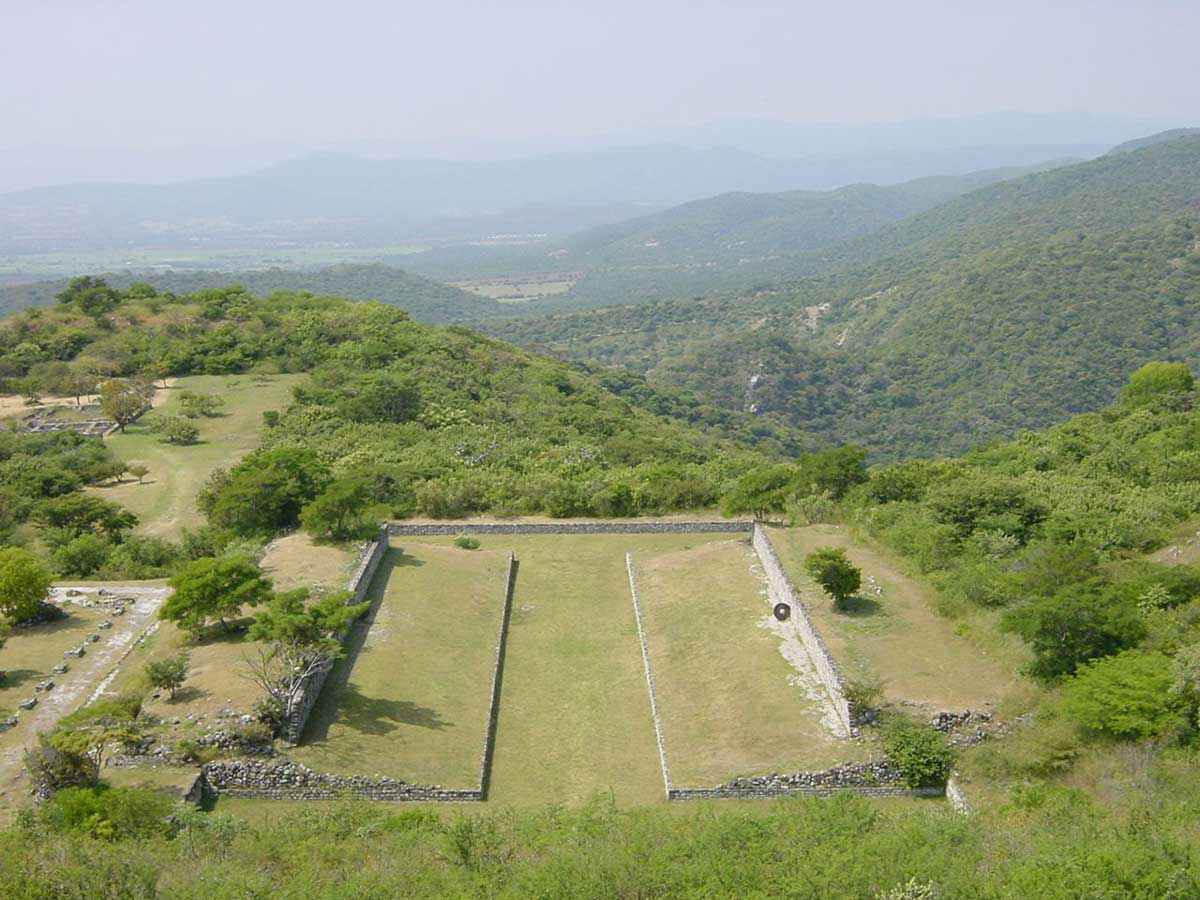
The Olmec legacy did not end with their own civilization. Their ball game spread across Mesoamerica and evolved as it moved. Archaeologists have found more than 2,000 ball courts across Mexico, Guatemala, Belize, western Honduras, and El Salvador. Most courts were long rectangular spaces framed by stone walls, forming a kind of stone arena.
Different cultures added their own twists. Among the Aztecs, a variation known as ulama sometimes used stone rings fixed high on the walls. Driving the ball through these hoops was difficult and dramatic. The circle itself had deep symbolic meaning: wholeness, health, and harmony, from the personal to the cosmic level.
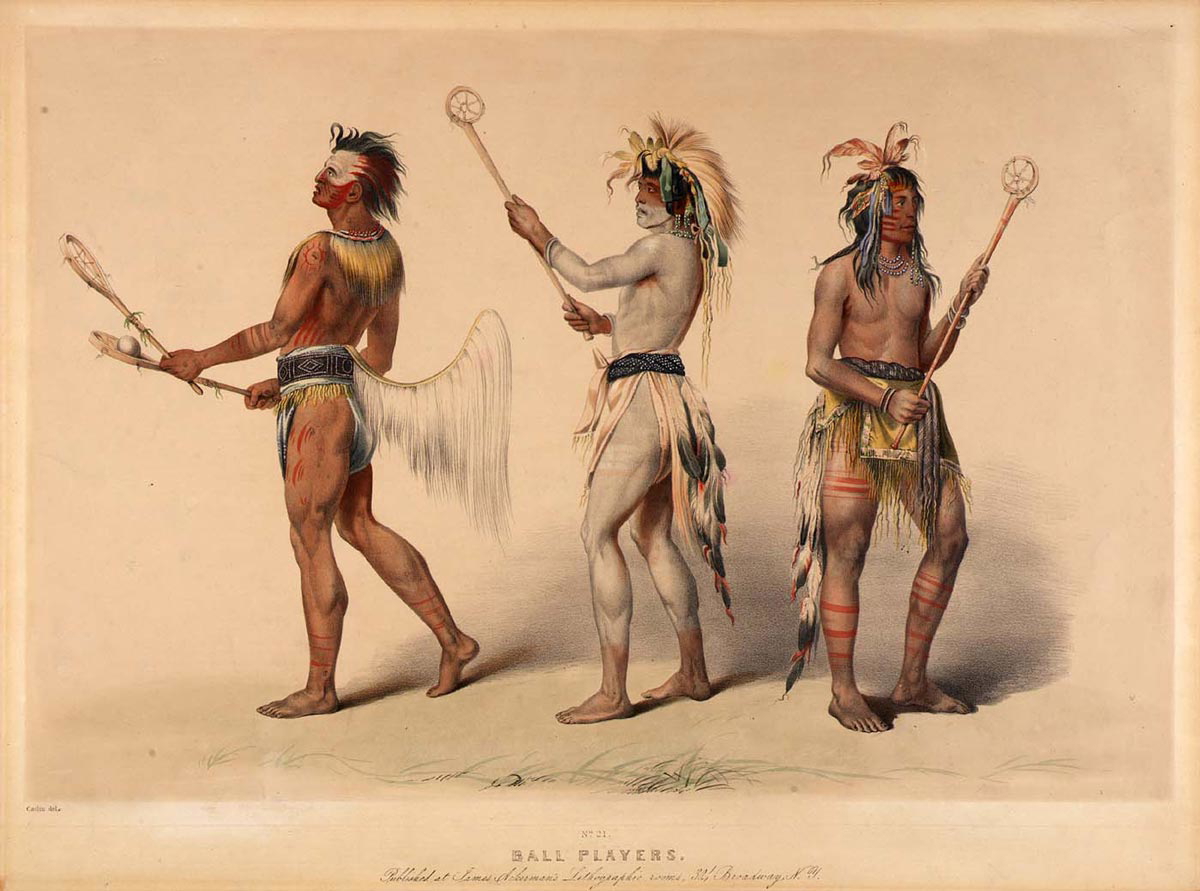
Ball play also took on new forms resembling later sports. Several Native American peoples played games similar to lacrosse. Among the Cherokee and others, stickball involved huge teams—sometimes up to a thousand players—spread across open fields between villages. Each player used two sticks called kabocca to catch and fling a small woven leather ball, the towa, toward a distant goal: often a rock outcrop, large post, or tree hundreds of yards, or even miles, away. Hands were off-limits; only the sticks could be used.
These matches could last for days, running from sunrise to sunset, with flexible rules announced just before the game. It was rough, intense, and deeply communal: part sport, part ritual, part social glue.
Greece: Episkyros, the Ancestor of Football and Rugby
On the other side of the world, the ancient Greeks also developed vigorous ball games. Around 900 BCE, they played several types of ball sport, but one in particular stands out: episkyros.
In episkyros, two teams of around 12–14 players faced off on a marked field. The ball was smaller and rounder than a modern soccer ball, crafted from leather sewn together and stuffed with animal innards. The outside was often brightly painted.
Unlike modern soccer, players could use their hands. The goal was to keep pushing forward, hurling the ball over the heads of the opposing team and forcing them back past their end line. In both structure and physicality, episkyros feels like a mix between rugby and American football.
In Sparta, where almost everything was a chance to harden the body, episkyros could be brutal. Full-body contact was allowed, and broken bones were common. For all its fun, it was also a training ground: a place to test strength, courage, and teamwork.
More reading


Rome: Harpastum and the “Small Ball Game”

When Rome borrowed ideas from Greece, it didn’t stop at philosophy. The Romans also adopted and adapted Greek sports, including episkyros.
Their version, harpastum, became popular across the Roman world for centuries. Played from roughly the 5th century BCE onward, it was sometimes called “the small ball game.” Teams again had around 12 to 14 players, but instead of a single large ball, harpastum used smaller, tough balls closer in size to a softball.
These balls were made from leather strips stitched together and filled with different materials. Light ones might be crammed with feathers; heavier ones used an air-filled bladder or denser stuffing. The game allowed both kicking and throwing.
If anything, harpastum was rougher than its Greek ancestor. Wrestling was part of the game, and players could grab and hold one another to block movement or prevent a score. Imagine a chaotic, grappling-filled scrimmage with no protective equipment.
As Roman soldiers and settlers spread into the British Isles and beyond, they likely took harpastum and other ball games with them. Over centuries, these traditions may have contributed to the slow evolution of medieval European ball sports—and, eventually, to the modern games we recognize today.
China: Cuju and the Military Roots of “Kick Ball”

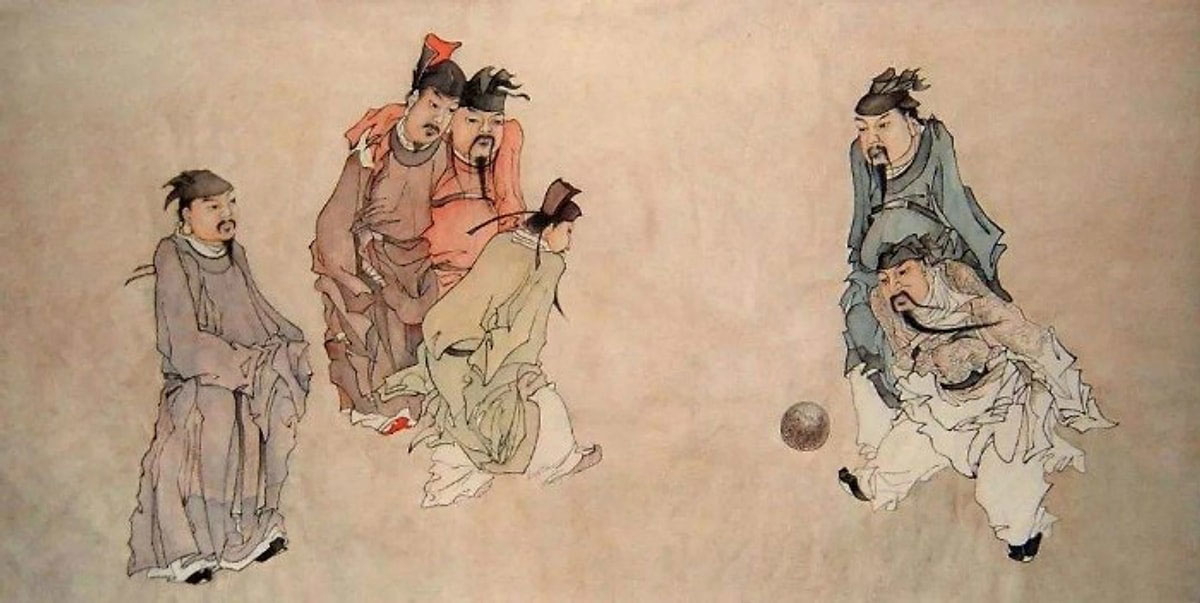
In East Asia, China developed its own ancient ball game: cuju (or tsu-chu), literally meaning “kick ball.”
Cuju dates back at least to the 3rd century BCE and was widely played during the Han Dynasty (202 BCE – 220 CE). But unlike many games that began as entertainment and later gained prestige, cuju started as something very practical: a military drill.
Confucian scholars and generals believed that sport was essential for building strength, agility, and readiness in soldiers. Cuju helped improve coordination, stamina, and teamwork, all wrapped in an activity that was more engaging than mindless marching or calisthenics.
During the Tang Dynasty (618–907 CE), cuju shifted from purely military training to professional sport. It became popular across social classes, from nobles to ordinary workers. Teams of six would compete to kick a ball through a round opening in the center of a netted goal. Hands were not allowed, and the ball was meant to stay airborne—no letting it roll along the ground like in modern soccer.
Over time, cuju became big business and a cultural phenomenon. But popularity has a price. By the Ming Dynasty (1368–1644 CE), the game had become associated with corruption and excess in the court, and the emperor eventually banned it. Even so, its legacy as one of the earliest “no hands” kicking games lives on.
Japan: Kemari, the Art of Keeping the Ball Aloft
From China, cuju’s influence spread to neighboring regions, including Japan. There, it inspired a more graceful, less combative game: kemari.
Kemari appeared around the 7th century CE and was played with a deerskin ball about eight inches across, stuffed with materials like sawdust or barley grains. At first, it was the pastime of nobles and samurai, but over time it spread to broader society.
Unlike cuju or many Mesoamerican games, kemari had no winners or losers. It wasn’t about scoring points. It was about cooperation and rhythm.
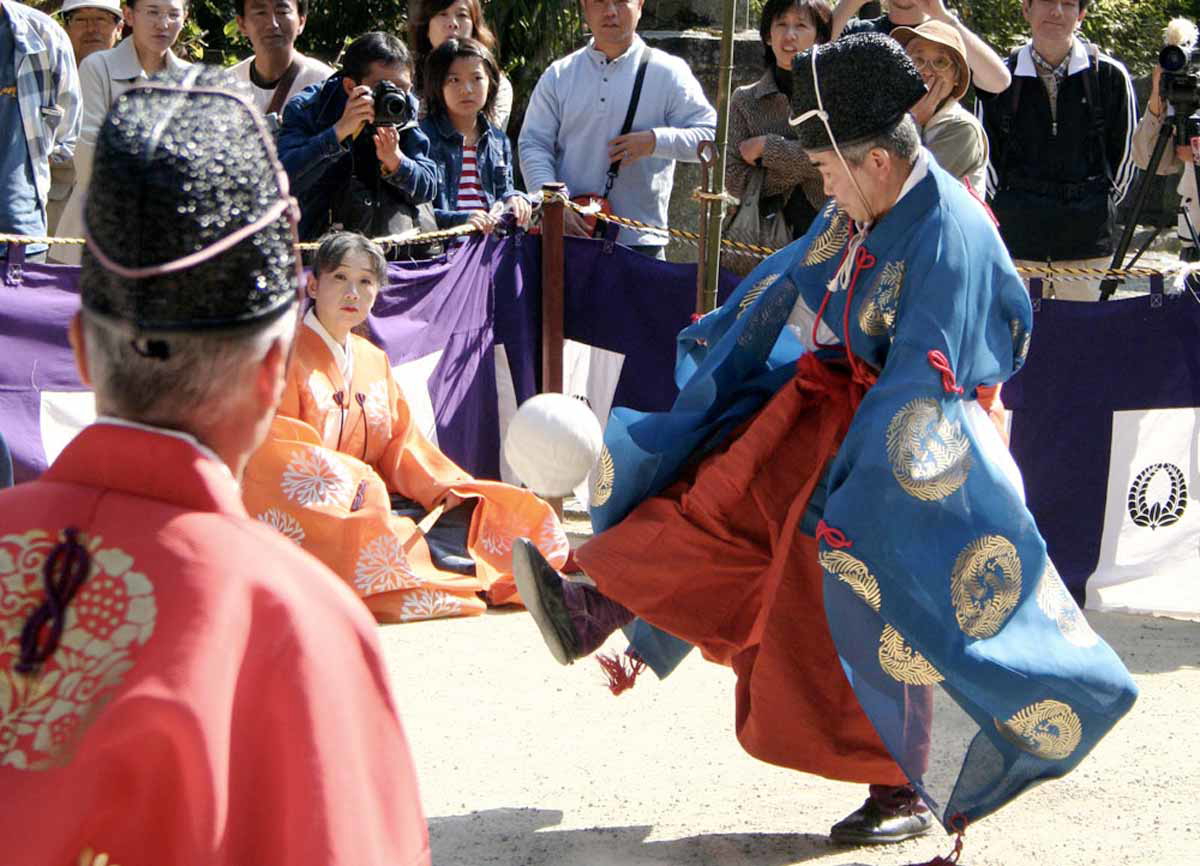
In a typical kemari game, six to eight players stood in a loose circle, often in a courtyard. Only the foot could propel the ball, but players could use other parts of the body to cushion or redirect it. The shared goal: keep the ball in the air as long as possible, passing it smoothly from one player to another.
One famous story tells of an emperor and his companions managing to keep the ball aloft for more than a thousand kicks. Poets watching said the ball seemed to hang in the sky, hovering almost magically above the group.
Over time, other sports and entertainments, like sumo wrestling, stole kemari’s spotlight. But the game never completely died. Today, it is still reenacted in traditional costume at the Tanzan Shrine in Sakurai, Japan, during spring and summer festivals. Visitors gather to watch players in historical dress recreate a pastime that once entertained emperors.
From Sacred Courts to Stadium Lights
From rubber balls bouncing in Olmec courts to kemari drifting through Japanese shrine courtyards, humans have been designing, kicking, throwing, and chasing balls for thousands of years.
These early games:
- trained warriors and strengthened armies,
- settled conflicts without bloodshed (or, sometimes, with ritual bloodshed),
- expressed religious beliefs and cosmology,
- brought villages and courts together for days of shared spectacle,
- and simply gave people joy.
Today’s soccer balls, footballs, basketballs, and volleyballs are descendants of these ancient inventions. Modern materials and rules are new; the urge is not. Every time a kid juggles a ball in a city street, or a stadium explodes in cheers after a goal, they’re participating in a story that unites Olmec athletes, Greek warriors, Roman soldiers, Chinese generals, Japanese nobles, and countless unnamed players across continents and centuries.
As long as there are people, there will probably be balls in motion—flying, bouncing, rolling, and drawing our eyes and hearts along with them.

support our project
At History Affairs, we believe history belongs to everyone.
donateYour contribution helps us keep this global archive open, free, and growing — so people everywhere can learn from the past and shape a better future.
know the present
Defense Tech Needs the State, Not Less of It
Trump Era or The New Imperial Age
America First, Venezuela, and the Trap of Old Habits
Why the AI Race Has No Winner
reading more
Assisted Dying: Righteous Act or Not?
America’s Most Beloved Urban Parks
How Victorian Women Use Corsets
A Student Revolt in Ancient Athens
Persecution, Apologetics, and Martyrdom in Early Christianity
An Eastern Glimpse of Rome’s Founding Myth
Ottoman Women 1500–1800: Home, Work, and Power
Church Life in the Second and Third Centuries
5 Arctic Explorers Who Revealed the Unknown World
How the Medieval Church Shaped Everyday Life in Europe
The Clash of Titans: Rome vs. Antiochus the Great
A Surprising, Long History of Veterinary Medicine