

On May 30, 1431, people poured into the marketplace of Rouen in Normandy to watch a teenage girl burn.
She was 19, a peasant’s daughter, dressed now not in armor but in a prisoner’s rough clothes. Two years earlier she had ridden at the head of French troops, broken the English siege of Orléans, and cleared the way for Charles VII to be crowned king. Now she was condemned as a heretic and handed over to the flames.
To understand how Joan of Arc went from miracle-maker to condemned witch in just two years, you have to see her story against the background of a kingdom at war with itself.
A Kingdom at War, a Dauphin Disinherited
Joan was born around 1412 in Domrémy, a small village on the border of the duchies of Bar and Lorraine. Her parents were tenant farmers. She wasn’t a noble, not a scholar, not a trained warrior. But her childhood unfolded in a France torn apart.
The Hundred Years’ War wasn’t just France vs. England. It was also French vs. French. On one side stood the supporters of the royal heir, the dauphin Charles. On the other were the powerful Burgundians, who had aligned themselves with the English.
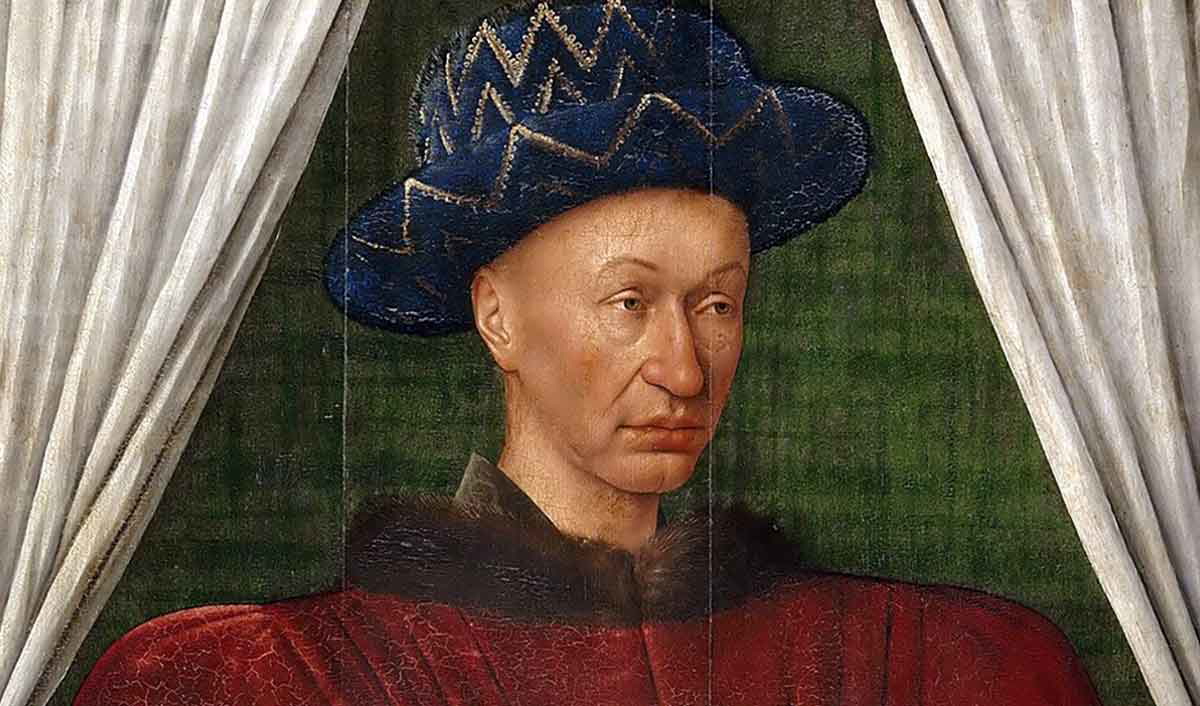
When Charles’s father, King Charles VI, died in 1422, the situation went from bad to worse. Thanks to the Treaty of Troyes (1420), signed by Charles’s own mother and Burgundian allies, the dauphin had essentially been cut out of the succession. The treaty recognized the English king as heir to the French throne.
So when Charles claimed to be Charles VII, many considered him an illegitimate “king without a kingdom.” English forces and their Burgundian allies controlled vast swaths of northern France. The royal court had drifted south to the Loire Valley, clinging to whatever territory it still held.
Then came Orléans.
In 1428, the English regent John, duke of Bedford, laid siege to Orléans, a key stronghold on the Loire. If the city fell, Charles’s position would be nearly hopeless. Demoralized and surrounded by bad news, the dauphin reportedly considered fleeing to Spain or making humiliating concessions to the English.
Instead, a teenage girl showed up at his court and told him God had other plans.
support our project
At History Affairs, we believe history belongs to everyone.
Your contribution helps us keep this global archive open, free, and growing — so people everywhere can learn from the past and shape a better future.
“The Maid” Arrives: Voices, Orléans, and a Crown
In 1429, Joan arrived at Chinon, where Charles held court. She wore men’s clothing and traveled with a small group of men-at-arms. She had already tried once to reach the dauphin at Vaucouleurs and failed. This time, she was granted an audience.
Joan claimed she heard voices—those of St. Michael, St. Catherine of Alexandria, and St. Margaret of Antioch. These voices, she said, had given her a mission: drive the English out of France and lead Charles to his rightful coronation.
Charles’s advisers, including theologians, examined her. She passed their tests—at least enough for them to tell the dauphin that this strange young woman might be worth listening to.
Joan herself wrote directly to the king of England, warning him to leave France or face disaster:
She comes sent by the King of Heaven… to take you out of France… If you do not leave France she and her troops will raise a mighty outcry as has not been heard in France in a thousand years.
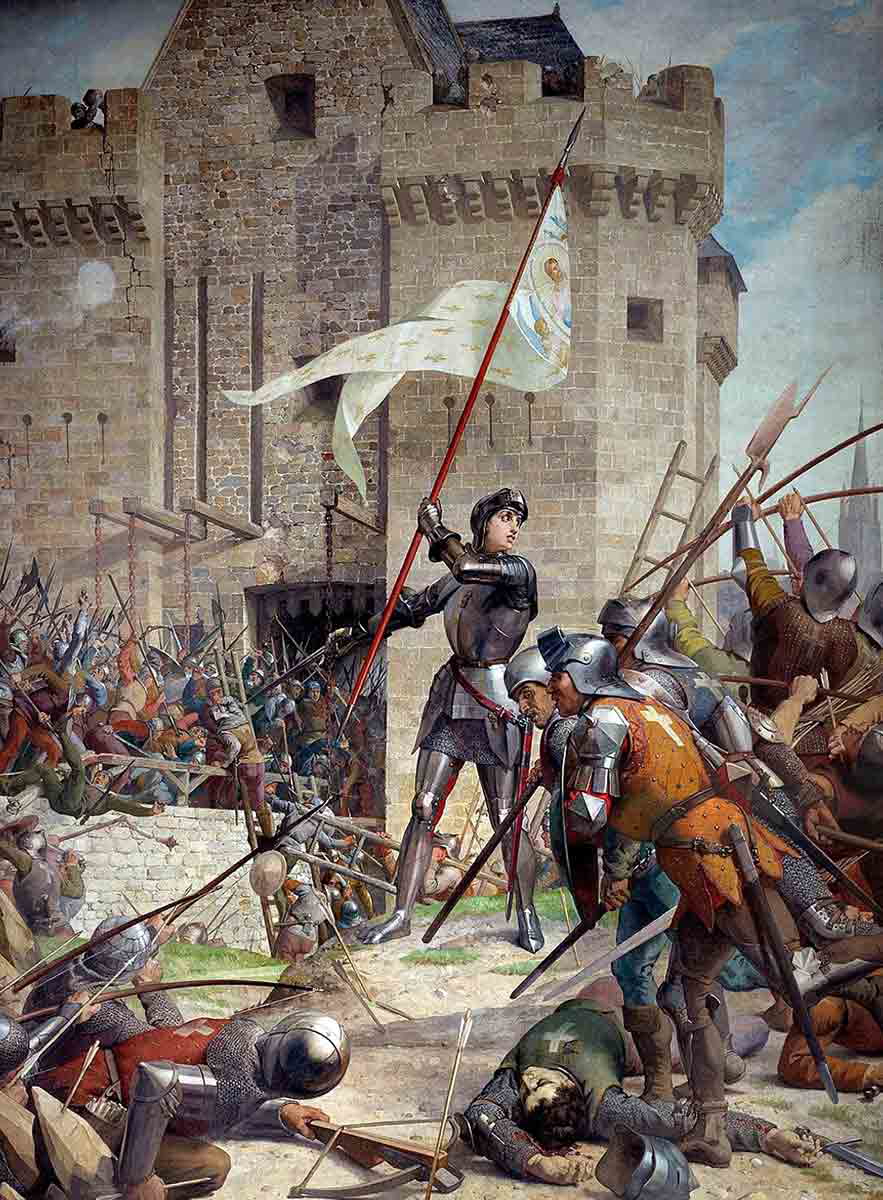
In April 1429, wearing armor and carrying a banner, Joan entered besieged Orléans with supplies and reinforcements. Her presence electrified the French troops. Within days, the French launched aggressive assaults on English positions. Buoyed by her confidence and charisma, they broke the siege.
News of Orléans spread like wildfire. A peasant girl who heard voices had done what seasoned commanders had failed to do. French morale soared; Joan’s fame rose with it.
Another decisive victory followed at Patay. Soon Charles was able to travel to Reims, the traditional site of French royal coronations—until then firmly under Anglo-Burgundian control. There, in July 1429, he was crowned Charles VII. Joan stood nearby, banner in hand, having done exactly what she had claimed she would do.
But once the crown was on Charles’s head, their paths began to diverge.
Joan’s Capture: Abandoned in a Divided France
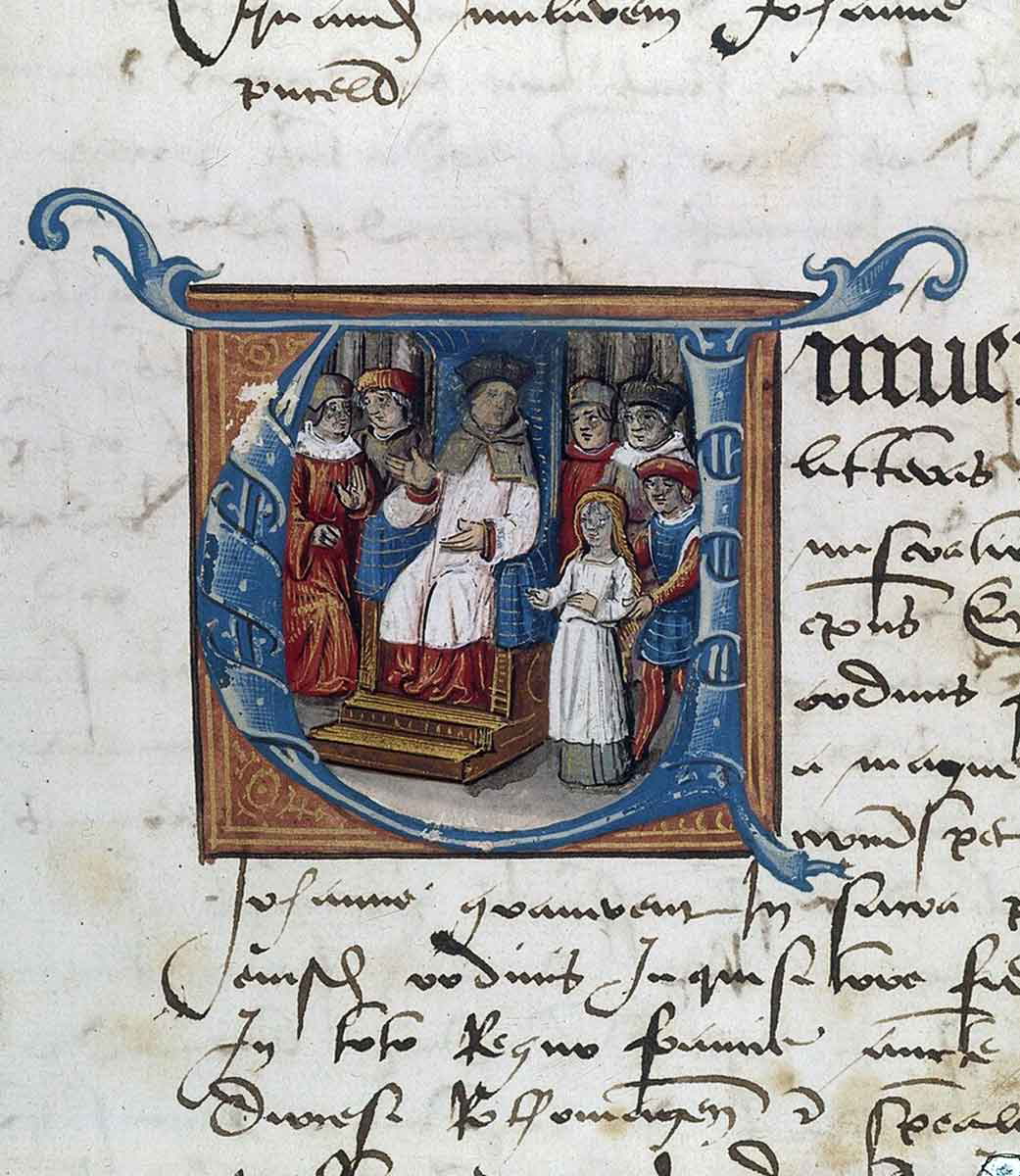
After the coronation, Joan wanted to press on, particularly toward Paris, which was still under Anglo-Burgundian control. Charles hesitated. Weary of war and politics, he chose caution over Joan’s boldness.
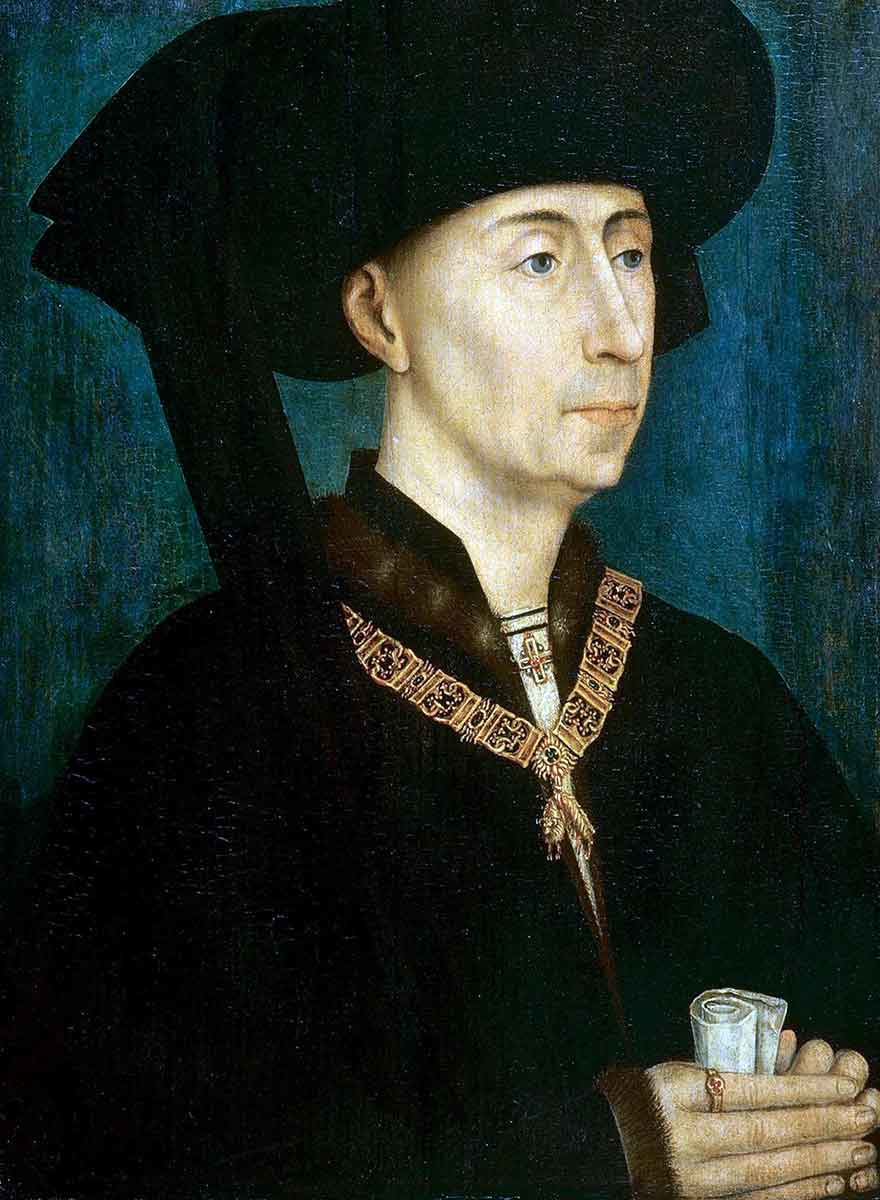
Meanwhile, the civil war inside France raged on. The Burgundians, under Philip the Good, moved against towns that had switched sides to support Charles. One of those towns was Compiègne.
In early 1430, Philip’s forces approached the region of Brie and Champagne. By March, they were threatening Compiègne. Joan rode out to help defend the city, arriving in mid-May. She tried to rally support at nearby Soissons, but the townspeople refused her entry and sided with the Burgundians.
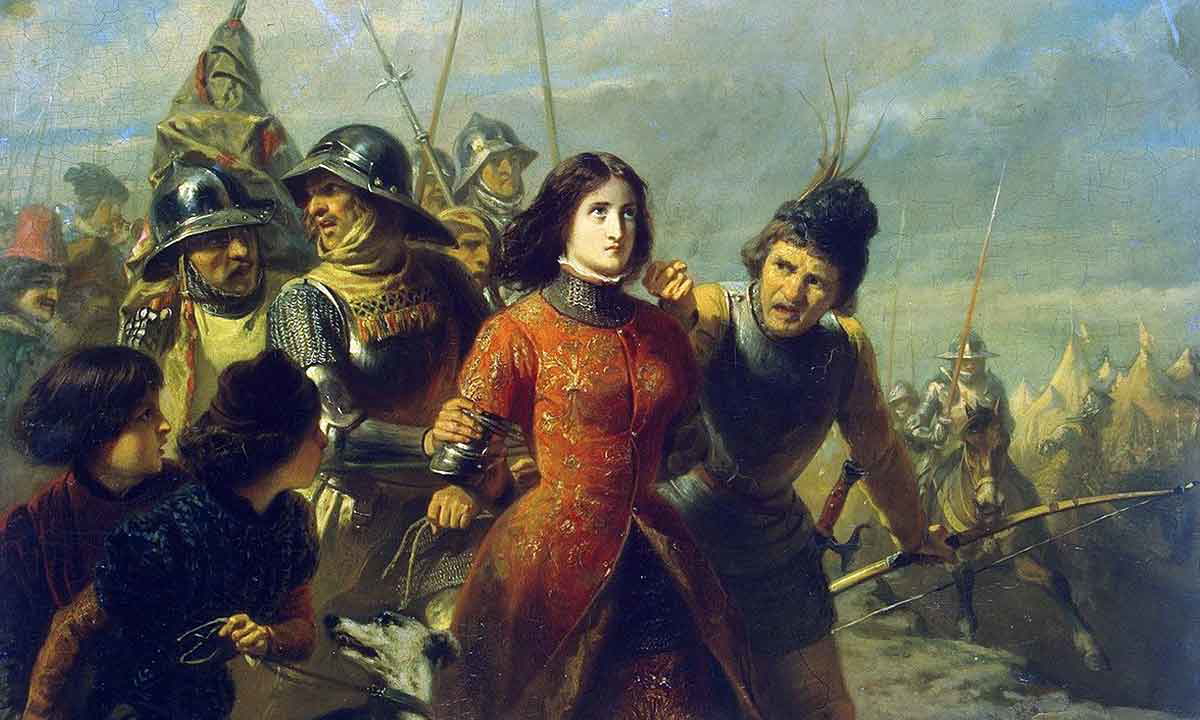
Back at Compiègne, on May 23, 1430, Joan led an attack against Burgundian forces. At first, things went well. But English reinforcements arrived, and the French attack was pushed back. Joan stayed at the rear of the retreating forces, covering the last soldiers as they tried to get back into the safety of the city.
The drawbridge closed too soon. Joan was left outside.
She was pulled off her horse and captured. Along with her brother, she was taken to Margny. From there she passed into the hands of John of Luxembourg, a Burgundian commander, who moved her between his castles after failed escape attempts—including one desperate jump from a tower.
Charles VII did nothing to rescue her.
Instead, negotiations began—not for her freedom, but for her purchase.
A Political Trial Disguised as a Religious One
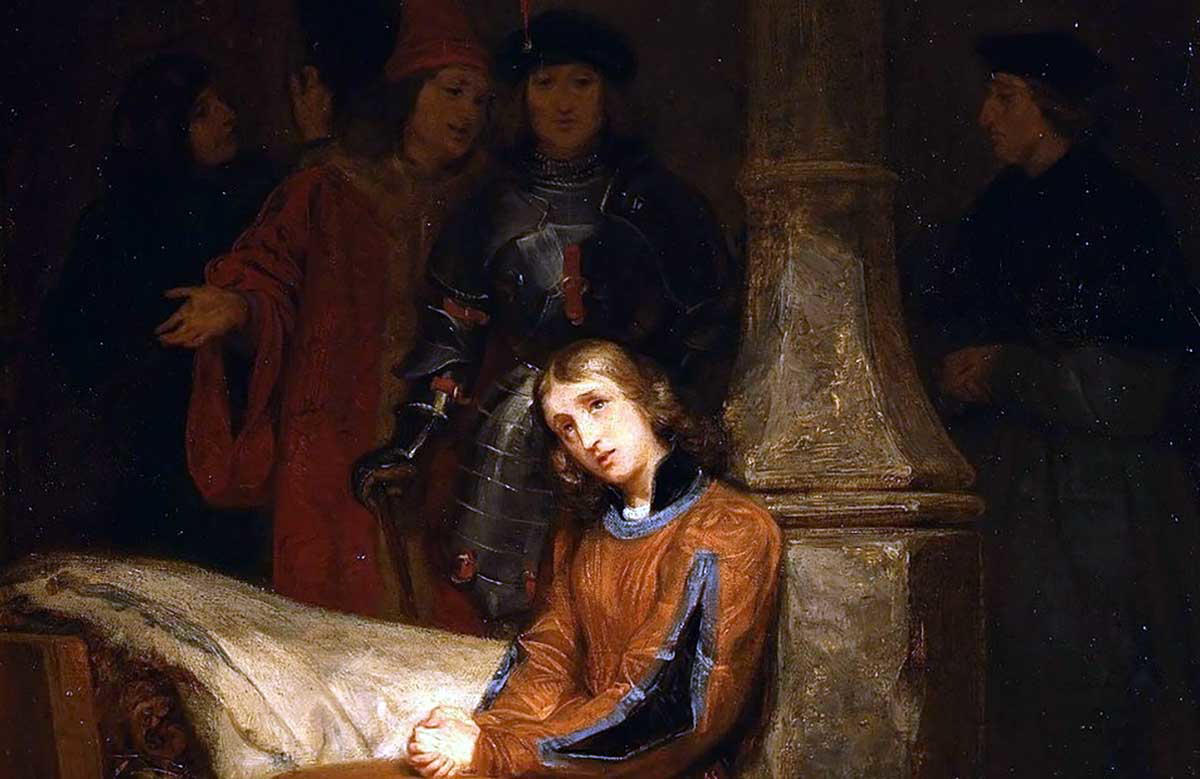
The Church technically claimed authority over cases of heresy, but churchmen did not work in a political vacuum. The bishop of Beauvais, Pierre Cauchon, was a staunch Burgundian ally and closely tied to the University of Paris, which had thrown its weight behind the Anglo-Burgundian cause.
Cauchon offered a large ransom—10,000 francs—to take custody of Joan. His request was backed by university theologians who were eager to put her on trial. As one of their agents wrote to the duke of Burgundy, they wanted Joan because she was “strongly suspected of various crimes smacking of heresy.”
Transferred to Rouen in English-controlled Normandy, Joan was now in the heart of enemy territory. Her judges would be Cauchon and the Vice-Inquisitor of France. The trial began on January 13, 1431.
On paper, this was a religious trial about heresy. In reality, it was a political case designed to tear down the woman who had secured Charles VII’s coronation—and, by extension, to undermine the king himself.
If Joan’s visions were false and her mission diabolical, then Charles’s coronation at Reims could be painted as tainted, even illegitimate.
What Was She Accused Of? Voices, Visions, and Disobedience
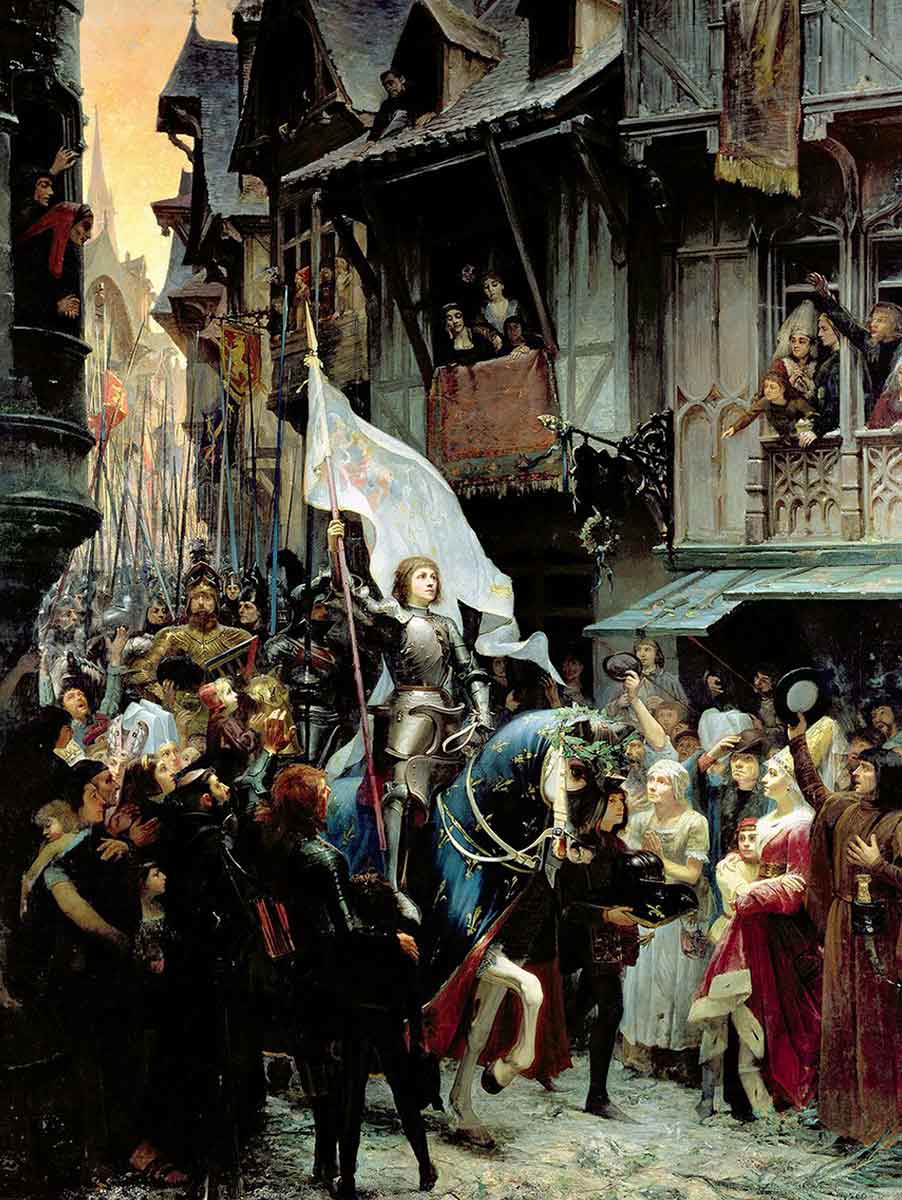
Seventy charges were drawn up against Joan. Many of them revolved around her claim to receive direct revelations from God and the saints.
Her judges argued:
- that her “voices” and visions were blasphemous,
- that she presumed to know the future,
- that she obeyed these private revelations instead of the institutional Church,
- and that she wore men’s clothing against divine and natural law.
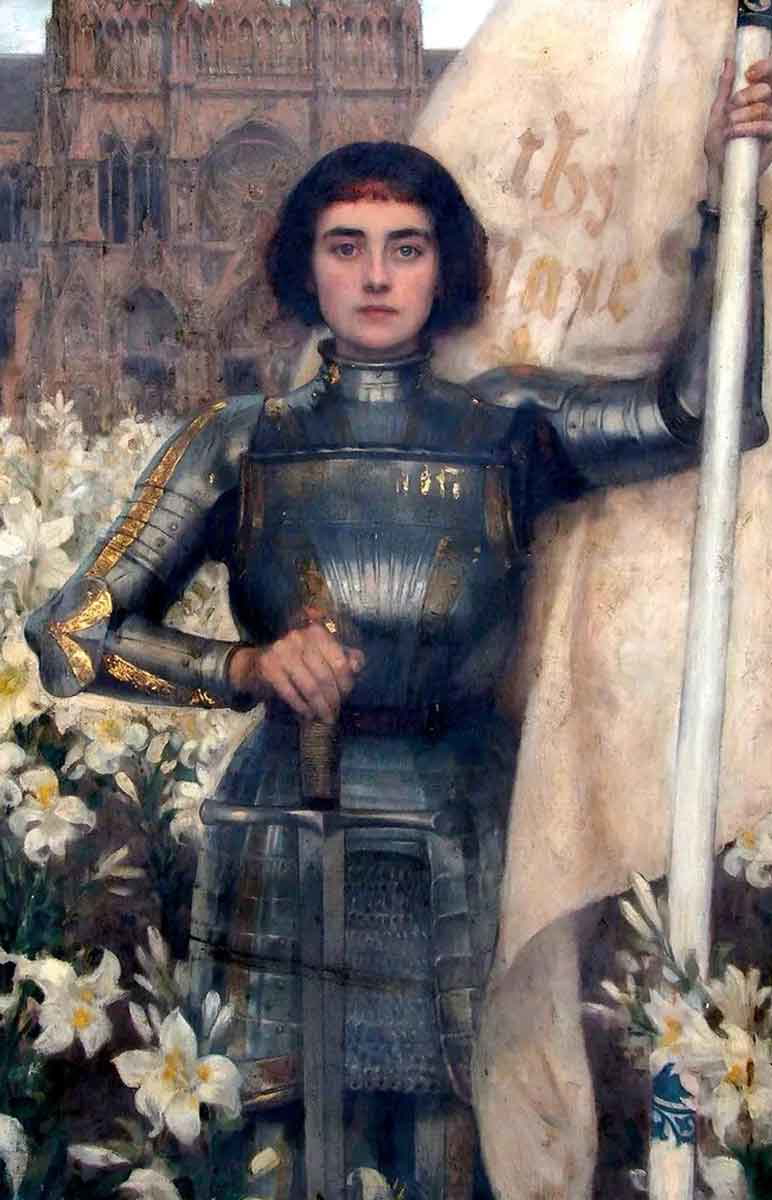
The timing mattered. The Church was still recovering from the Western Schism (when rival popes had competed for authority) and wrestling with the Conciliar Movement, which had tried to place church councils above the pope. In that climate, anyone claiming a special direct line to God sounded dangerous.
Inquisitorial trials were stacked against the accused. Defendants had no right to a lawyer and little ability to call their own witnesses. Judges could combine theological suspicion with political motives—and in Joan’s case, they certainly did.
She knew she was walking into traps. Questioned about her visions, she often answered cautiously, refusing to give details that might entangle Charles VII or contradict Church teaching. Even hostile observers admitted she showed remarkable intelligence and composure under pressure.
But while the court struggled to prove that her visions were heretical, there was one obvious, undeniable fact they could lean on: she wore men’s clothes.
“Abominable to God”: The Clothing Question
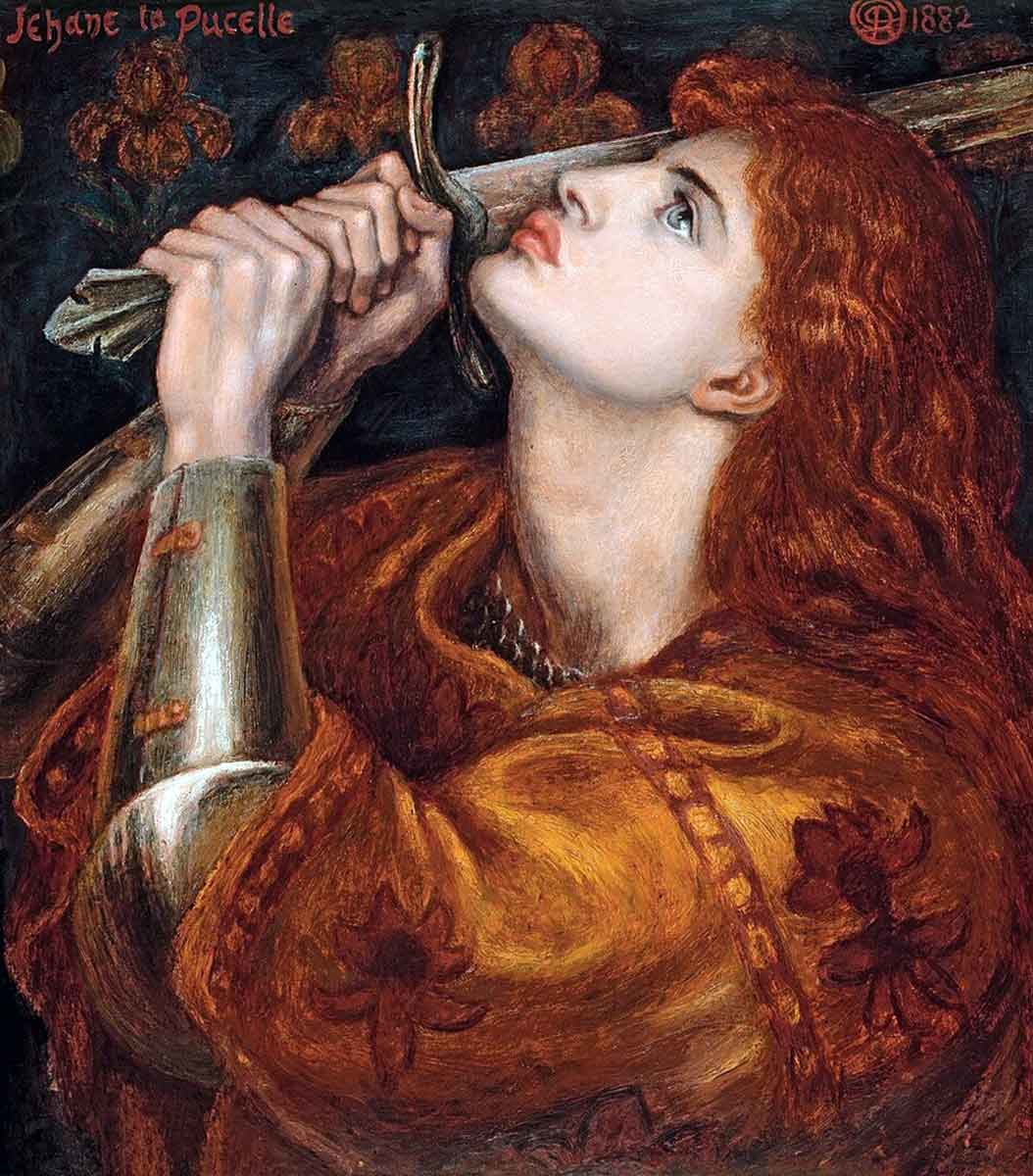
Shortly before Joan’s trial formally began, an official document in the name of the young English king Henry VI denounced not only her teachings but her attire. It accused her of having “put off the habit and dress of the female sex” and called this “contrary to divine law, abominable to God, condemned and prohibited by every law.”
Medieval theology had clear opinions on this. Thomas Aquinas, in his Summa Theologica, condemned cross-dressing as sinful unless there was a serious necessity—for example, protection from danger.
Joan repeatedly argued that her clothes were, in fact, necessary.
In court records, she said she wore men’s clothing in prison to protect herself from assault. She also said her voices had instructed her to dress as a man. For Joan, the clothes were part of the mission God had given her, both for modesty in the soldiers’ camp and for practical safety.
The judges, however, seized on her attire as concrete proof of wrongdoing. You couldn’t see her visions, but you could certainly see that she was dressed like a man.
In May 1431, under the threat of being handed over to the secular arm (which meant execution), Joan signed an abjuration—basically a declaration that she renounced her “errors.” As part of the sentence, she was condemned to life in prison and forced to put on women’s clothes.
Then, a few days later, guards reported that she had resumed wearing men’s clothing.
Why? The sources differ. According to Joan, the saints’ voices had rebuked her for her earlier abjuration. One later witness suggested that the male clothes had been deliberately left in her cell where she could not avoid them. Whatever the details, this “relapse” gave the judges what they needed.
Having fallen back into her “error,” Joan could now be declared a relapsed heretic. Under the rules of the Inquisition, that meant death.
On May 30, 1431, she was handed back to the secular authorities and burned at the stake in Rouen’s marketplace.
More reading





Her Death and Her Afterlife
Joan’s choice of clothing has become one of the most debated aspects of her story. Some modern readers see it as a challenge to medieval gender norms, others as purely practical or purely obedient to her visions—or all three at once. In her own lifetime, it served as a convenient legal weapon for her enemies.
But more than anything, Joan was a casualty of civil war.
The bitter fracture between the Armagnacs (supporters of Charles VII) and the Burgundians set the stage for her trial. The murder of John the Fearless, duke of Burgundy, in 1419 on Charles’s orders had pushed his son, Philip the Good, into alliance with the English. When Joan stood in the dock at Rouen, nearly everyone involved in judging her belonged, directly or indirectly, to that Anglo-Burgundian camp.
Her conviction helped them in multiple ways: it smeared Charles VII’s greatest supporter, undermined his coronation, and reinforced English claims in France.
But politics cuts both ways.
Once Charles finally managed to drive the English out of most of France, the existence of a heresy verdict hanging over the woman who had crowned him became a problem. If she had been a witch or a fraud, what did that say about his reign?
In 1455–1456, about twenty years after her death, Charles ordered an inquiry into the original trial. The result was a formal nullification of the 1431 verdict. Joan was officially rehabilitated. Just like her condemnation, this reversal was highly political—aimed at cleansing the stain of heresy from the story of Charles’s rise.
Yet beyond the politics, Joan of Arc refused to disappear.
Over the centuries she has been reclaimed as a saint (canonized in 1920), a national heroine of France, a symbol of resistance, a feminist trailblazer, and a muse for artists, writers, and filmmakers. Her life remains a tangle of faith and doubt, courage and vulnerability, extraordinary conviction and brutal injustice.
What is clear is this: in the chaos of a shattered kingdom, a teenage peasant girl stepped into the heart of war and altered the fate of France—and for that, the powers of her day chose to burn her.

support our project
At History Affairs, we believe history belongs to everyone.
donateYour contribution helps us keep this global archive open, free, and growing — so people everywhere can learn from the past and shape a better future.
lastest
Ottoman Sultans and Their Vices: Alcohol, Drugs, Women, and Rebellious Princes
Ottoman Women 1500–1800: Home, Work, and Power
Joan of Arc’s Trial and Execution
A Short History of Ball Games: From Olmec Rubber to Japanese Kemari
Nevada History: From Ancient Rock Art to Neon Lights
The 1911 Champagne Riots in France
Julius Caesar and the Danger of Punishment Without Due Process
Sylvia the Grizzly the Celebrity Bear in Yellowstone
Theodore Roosevelt and the Modern White House Press Machine
reading more
Agamemnon: Leader of Mycenae and the Trojan War
Five US-Backed Counterrevolutions in Latin America
When Achilles Met Penthesilea
379/8 BC: A Year of Intrigue and Shifting Alliances in Ancient Greece
Arthur’s Little-Known Brothers
Jan Smuts: South African Leader, Global Statesman
Ottoman Sultans and Their Vices: Alcohol, Drugs, Women, and Rebellious Princes
Leibniz’s Monads, in Plain Language
Nestor Makhno: The Ukrainian Anarchist
Lascaux Cave: Unveiling a Paleolithic Masterpiece
The Fathers of the Old Catholic Churchand Their Problems
The Qin Dynasty (221 – 206 BCE): Era of Legalism in Chinese History