
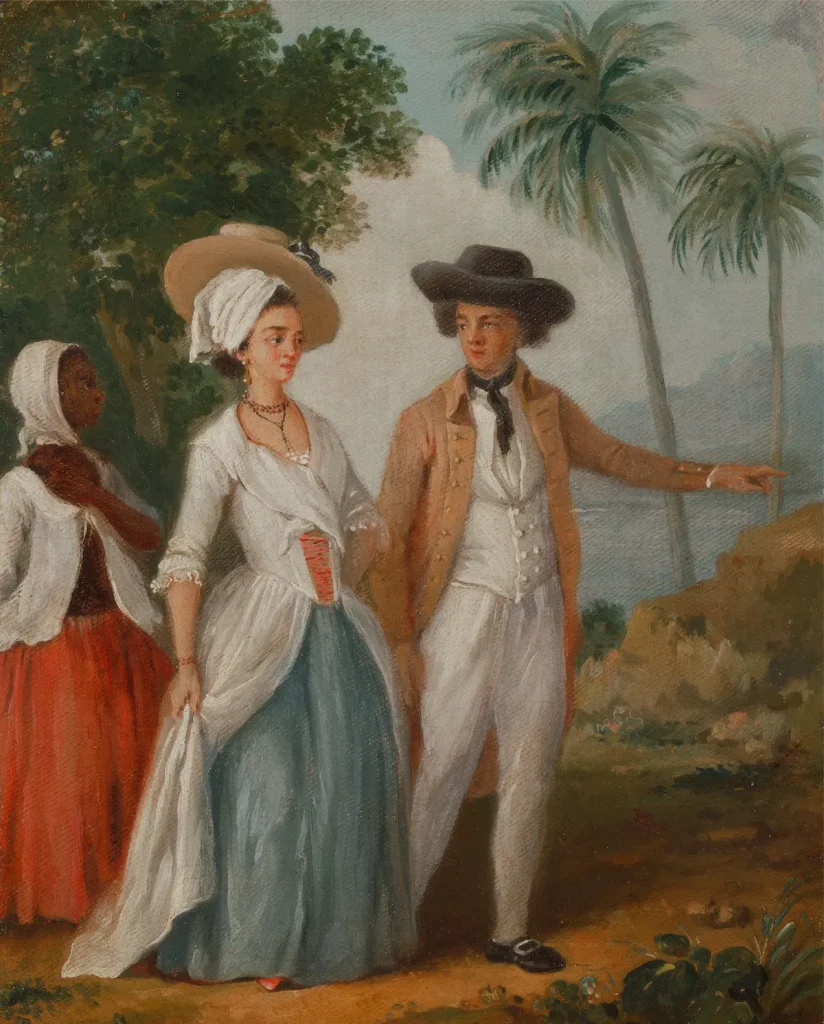
When we talk about Britain’s entanglement with Caribbean slavery, the spotlight usually lands on men: planters, merchants, MPs, bankers, bishops. Miranda Kaufman’s Heiresses pushes that beam sideways and asks a blunt, uncomfortable question: what about the women who inherited, invested, spent, and defended slavery’s profits?
The book’s central move is simple and effective. It follows the money—inheritance money, marriage money, compensation money—and uses it to trace how women of means in Britain could be deeply implicated in plantation slavery, even when the usual historical narratives make them look like bystanders.
A story hiding in plain sight
Over the last few decades, historians have built a clearer picture of how thoroughly slavery money ran through British society. One especially striking revelation sits at the heart of Kaufman’s project: a huge share of those who benefited from compensation after abolition were women—and many of them weren’t even living in the Caribbean. They were in Britain, collecting income tied to plantations and enslaved labour, often through inheritance structures that made their involvement easy to miss.
That “easy to miss” part matters. The book argues that women’s complicity has often been obscured not because it wasn’t there, but because the legal and social machinery of property could disguise it.
Nine lives, one system
Kaufman builds the book around nine case studies—women born in the early eighteenth century who lived long enough to see massive change on both sides of the Atlantic. They aren’t presented as carbon copies. They come from varied backgrounds and circumstances, including women as different as:
- Isabella Bell Franks (1769–1855), tied to an Ashkenazi Jewish mercantile world
- Frances Dazell (1729–78), a mixed-heritage woman born to an enslaved mother and an enslaver father
That range is important because it avoids a lazy moral shortcut. This isn’t a story about one “type” of villain. It’s about a system that could pull in people from different corners, then reward them—often handsomely—for playing along.
The law shaped their power—and their cover
One of the book’s sharpest threads is how women’s lives were constrained by law and expectation while still being financially enabled by slavery.
Inheritance and property weren’t simple for women. Two old forces mattered a lot:
- Primogeniture, which favoured male inheritance lines
- Coverture, which effectively folded a married woman’s legal identity into her husband’s
Add to that the complications of illegitimacy, contested wills, and family pressure, and you get a world where women could be central to wealth while appearing, on paper, to be secondary.
Here’s the twist Kaufman leans into: sometimes women’s limited ability to inherit directly helped conceal their role. Money could move through husbands, trustees, attorneys, and family networks—yet still enrich a woman’s life and decisions. So the question isn’t “did women have power like men?” It’s “how did women operate inside a system that limited their formal power but still allowed them to profit?”
Partnership, networks, and influence
These heiresses weren’t passive recipients of cheques. The book shows women collaborating with husbands, children, and attorneys to protect Caribbean estates and keep the profits flowing. And because wealth buys access, some of them developed close ties to elites—royal circles, major politicians, cultural celebrities.
That social intimacy had consequences. One of the most striking examples is Elizabeth Vassall (1771–1845). Her family’s Jamaican interests went back generations, and she used influence to push allies into Parliament and support political careers that aligned with defending “West India” interests. In other words: money didn’t just buy paintings and property. It bought leverage—political leverage deployed against abolitionist change.
Other women in the book move through similarly revealing worlds: hosting famous writers, connecting to prominent families, building status at home while the engine of their lifestyle ran on coerced labour abroad.
Wealth so large it turns human beings into “figures”
At several points, the numbers are so huge they almost numb you—exactly as the records themselves tend to do.
One standout case is Anna Susanna Taylor (1781–1853) and her husband, who were described by contemporaries as the “richest commoners in England” after inheriting wealth from her uncle Simon Taylor, an extremely wealthy Jamaican planter. The sums involved are staggering—and the book doesn’t let you forget what those sums mean: they were built, in part, on the ownership of thousands of enslaved people.
But Kaufman also knows the danger here. If you only follow estates, wills, and payouts, enslaved people become a shadow—present everywhere, named nowhere.
So the book tries to push against the archive’s coldness by highlighting episodes where enslaved people appear as agents, not just entries. One particularly vivid story is Betsy Newton, who came to London in 1795 carrying her child and pleading for liberty. Her enslaver refused formal manumission, but conceded she was free because she had set foot on English soil. Betsy’s fight didn’t end there—she tried to secure freedom for her children still enslaved in Barbados, with little success.
That kind of story does something important: it interrupts the “heiress narrative” with the human cost that made heiresses possible.
Abolition didn’t mean freedom—and the state paid twice
Heiresses also refuses the comforting idea that 1833 neatly ended the moral problem. Enslaved people were forced into an “apprenticeship” system—labour without pay—until 1838. And astonishingly, that transition itself came with enormous government spending on top of the compensation already paid to enslavers.
Kaufman’s point here is brutal: if you read the legislation in full, you see clearly who the system was designed to protect. The act did not simply abolish slavery; it also aimed to secure “industry” among the newly freed while compensating those who had claimed a right to their services. Even after abolition, some heiresses continued to benefit from unfree labour—whether through apprenticeship schemes or coerced indenture systems that followed.
So the book isn’t just about women inheriting slavery money. It’s also about how quickly exploitation can change shape without disappearing.
Why this matters now
There are two reasons this book lands with force.
First, it expands how we understand the legacy of slavery. Not by inventing a new villain, but by showing how thoroughly slavery profits were woven into British wealth, respectability, and family strategy—including women’s lives, which are often treated as morally cleaner by default.
Second, it challenges a softer myth: that limited formal power automatically makes someone ethically innocent. These women lived under legal constraints, yes. But Kaufman’s portrait suggests many of them did not wrestle publicly—or privately, as far as the sources show—with the morality of what they owned and what they were defending.
And that point loops straight into the present. The abolition fight took decades of pressure, argument, resistance, and organising. Conversations about reparations, by comparison, are still young—and often politically fragile. A book like this doesn’t settle those debates, but it does something essential: it sharpens the historical picture so that modern arguments aren’t built on selective memory.
Heiresses is, in the end, a book about women—but not in the flattering, costume-drama way. It’s about women as financial actors inside a brutal imperial economy, and about how polite society can keep its hands looking clean while living off the proceeds of human suffering.
Buy on Amazon: Heiresses: Marriage, Inheritance, and Slavery in the Caribbean

support our project
At History Affairs, we believe history belongs to everyone.
donateYour contribution helps us keep this global archive open, free, and growing — so people everywhere can learn from the past and shape a better future.
know the present
Defense Tech Needs the State, Not Less of It
Trump Era or The New Imperial Age
America First, Venezuela, and the Trap of Old Habits
Why the AI Race Has No Winner
reading more
Britain’s Fight for Clean Air
Global Order After America: How Allies Can Lead Together
Montesquieu, Rousseau, and the Evolution of Social Institutions
How the Tudors Built Status
The Clash of Titans: Rome vs. Antiochus the Great
History of Zulu People
Stalingrad Winter of Valor and Despair
Axis Powers in World War II: The Rise and Fall of Tyranny
When Achilles Met Penthesilea
The Rise of the Yamato Clan and the Birth of the Japanese State
The Acropolis of Ancient Greece
The Nazi-Soviet Pact: A Deal with the Devil