
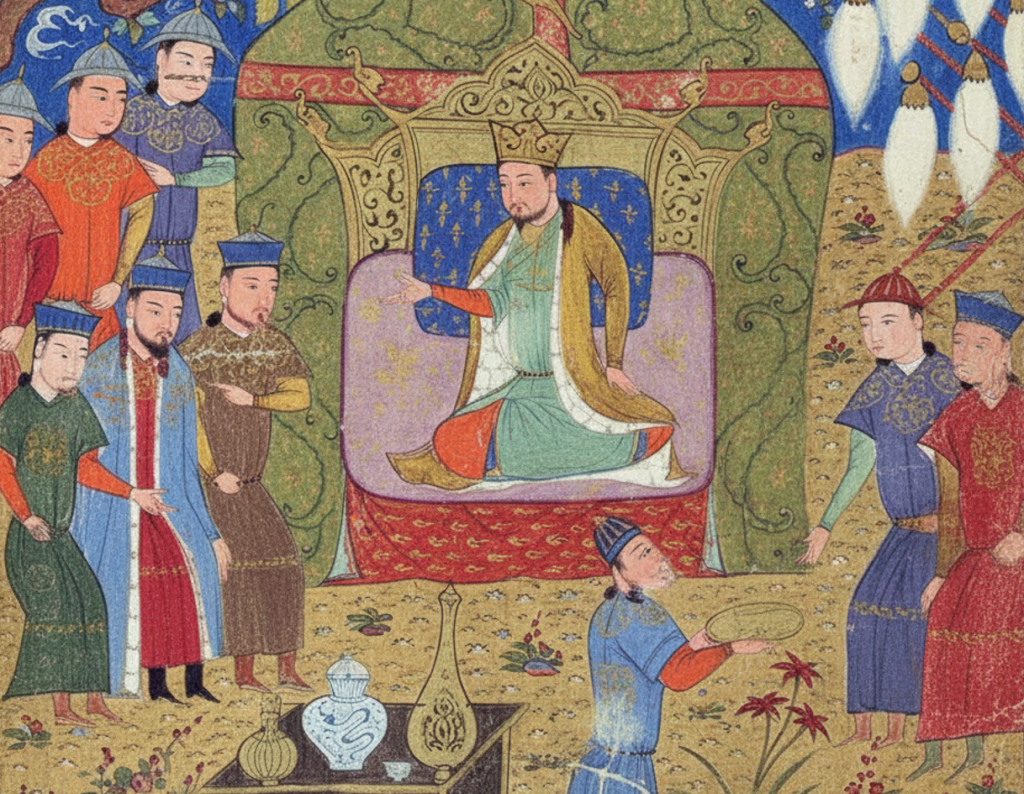
When most people think of the Mongol Empire, they picture burning cities, mountains of skulls, and armies that seemed to swallow kingdoms whole. Modern climate historians even argue that Genghis Khan killed so many people that abandoned farmland regrew forests and pulled an estimated 700 million tons of carbon out of the atmosphere — earning him the strange nickname of the “greenest invader” in history.
At the same time, you’ll often hear something very different:
that the Mongols were unusually tolerant of other religions, especially compared to many medieval states.
So which is it? Were the Mongols bloodthirsty conquerors who just happened to be religiously open-minded, or is this “tolerance” more complicated than it sounds?
Let’s unpack it.
A Vast Empire, Many Faiths
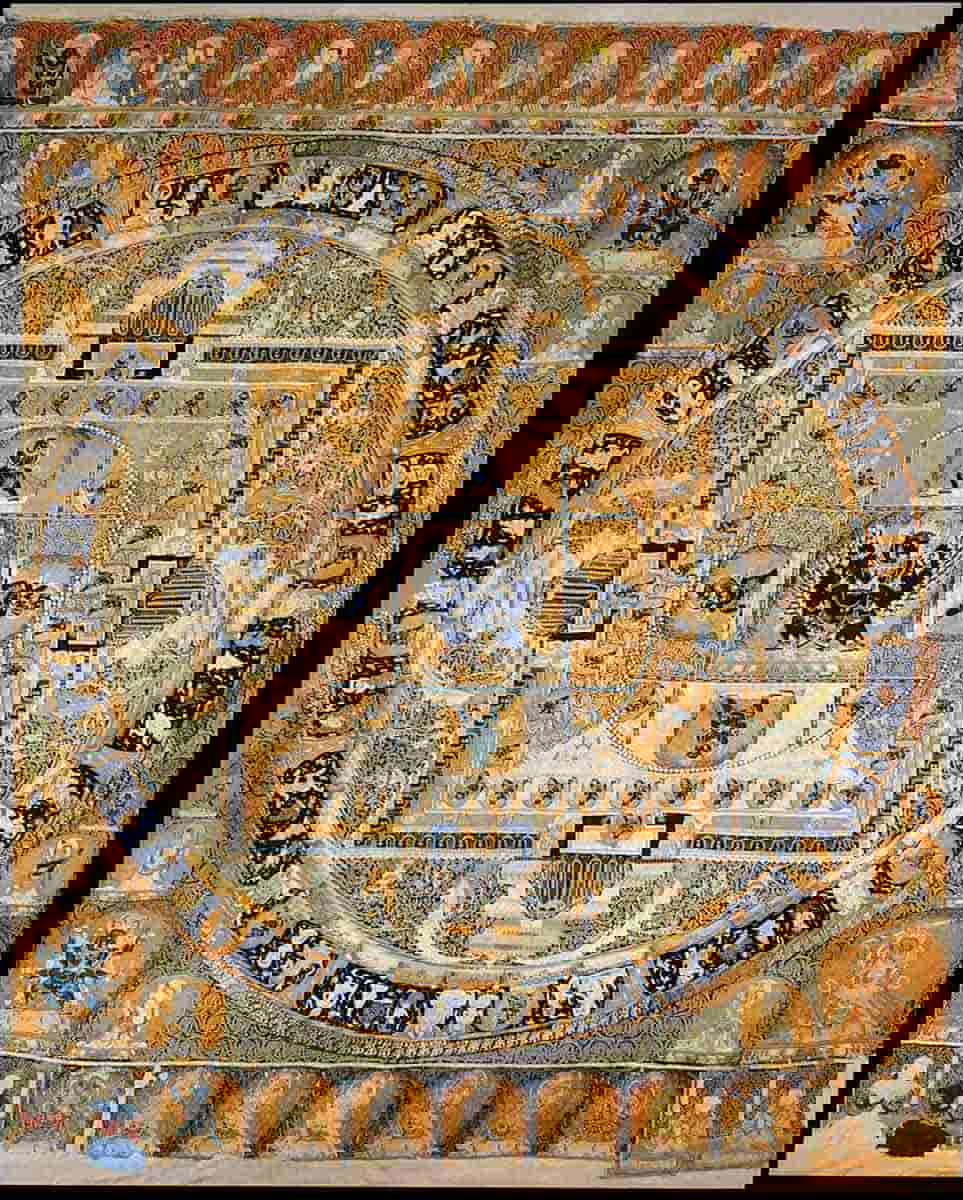
At its height, the Mongol Empire stretched from the Korean peninsula to Eastern Europe. It was a patchwork of peoples, languages, and religions: Buddhists, Muslims, Christians, Daoists, Jews, Confucians, and more lived under Mongol rule.
It all began with Temüjin, who later took the title Genghis Khan (“universal ruler”) in 1206. He united the feuding Mongol tribes of the steppe, a harsh environment where survival depended on herds, raiding, and trade.
Several forces pushed the Mongols outward:
- Economic pressure: Northern Chinese states like the Jin and Western Xia began restricting trade with the steppe peoples. For the Mongols, who relied on that trade for essential goods, this was more than an annoyance — it was a threat to survival.
- Politics and power: Unifying the tribes naturally led to looking outward. A united army needed targets, and weak neighboring states were tempting.
- Religious belief: Temüjin believed that Tengri, the Mongols’ sky god, had given him a mission: to bring the world under one sword. His new title, Genghis Khan, reflected that sense of universal rule.
As Mongol armies burst out of Mongolia into northern China and Central Asia, they suddenly had to deal with a problem they’d never had before:
what do you do with all these foreign religions?
Tolerance Was Not the Starting Point
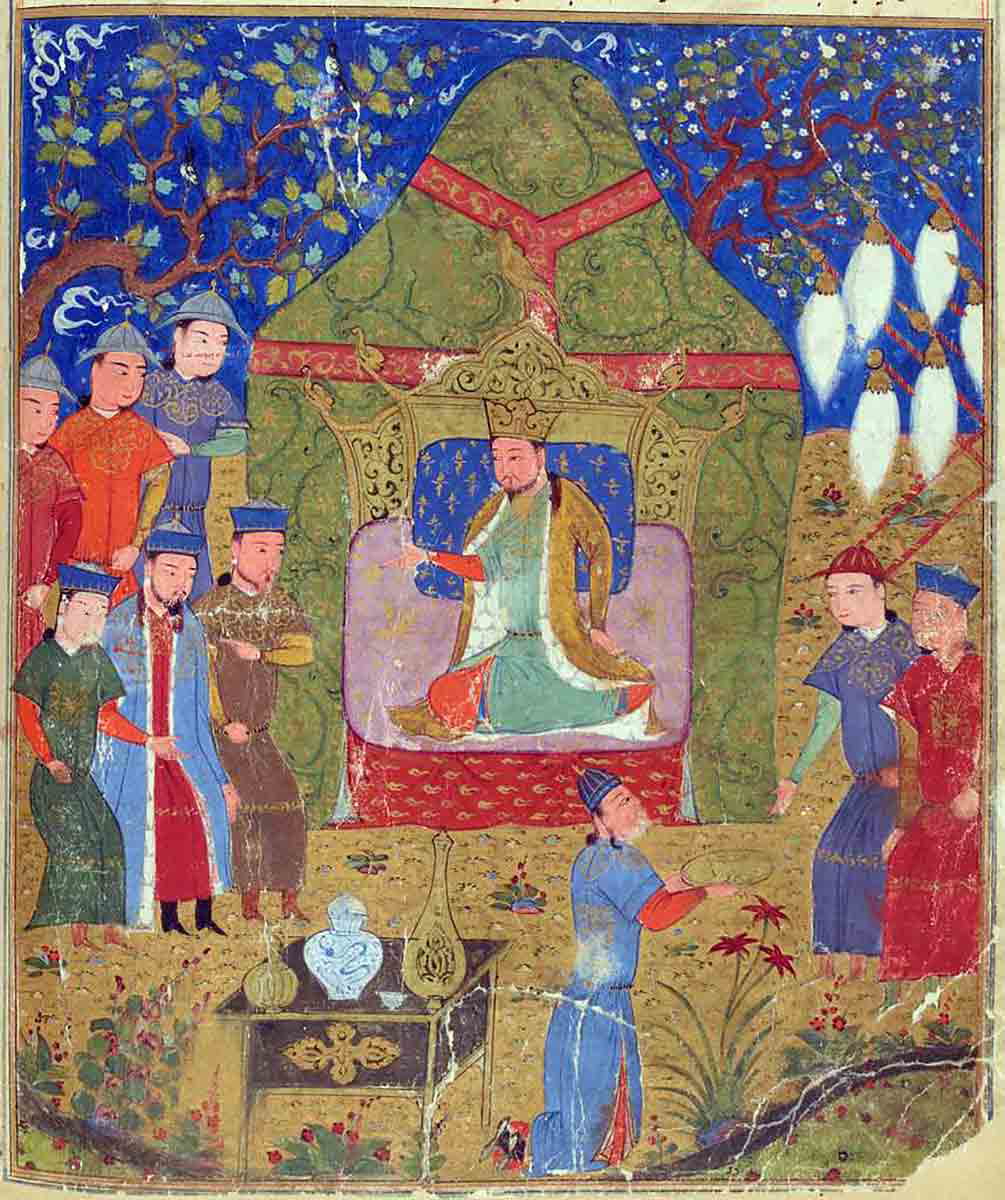
We often imagine the Mongols with a kind of built-in policy of religious freedom. That’s not quite true.
Early on, Genghis simply followed Mongolian Tengrism, a mix of shamanism and animism centered on the sky god Tengri. There was no original grand idea like, “everyone is free to worship as they please.” Religious “tolerance” developed gradually, as a practical response to ruling a huge, diverse empire.
And even then, it was not universal. The Mongols did not open their arms to all religions equally. Their acceptance was selective and rooted in their own spiritual worldview.
First Encounters: Genghis Khan and the Buddhists
Some of the most famous early cases of Mongol “tolerance” involve Buddhist monks.
One story tells of a meeting around 1214 between Genghis and Haiyun, a Zen Buddhist monk. Genghis noticed Haiyun’s shaved head and told him to grow his hair and wear it in the Mongol style — typically shaved on the sides with a braid in front. Haiyun replied that doing so would cost him his status as a monk.
Surprisingly, Genghis relented. He let Haiyun keep his shaved head. That privilege was later extended to other Buddhist monks.
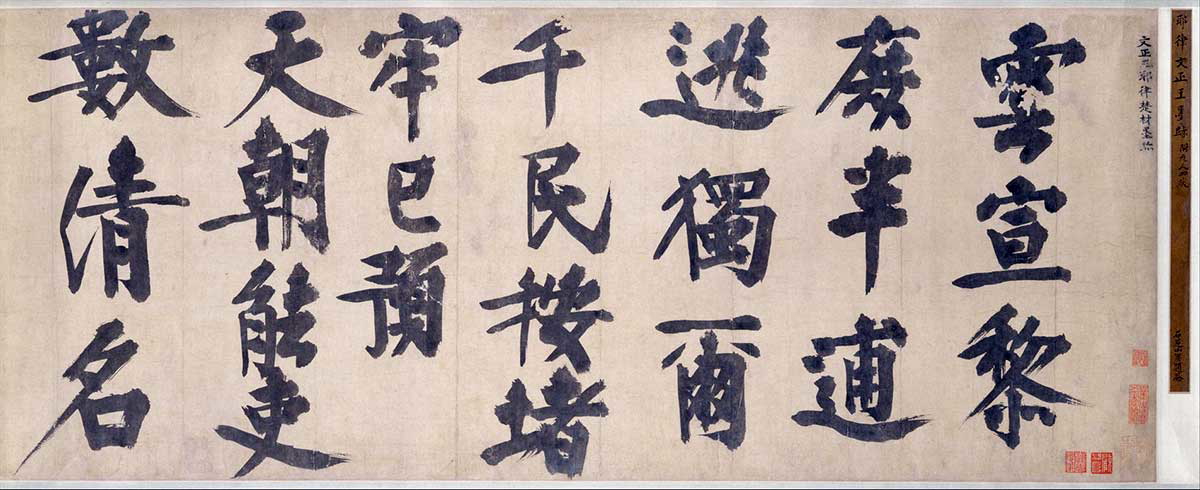
In another incident, Genghis and his armies reached a Buddhist monastery at Mount Wutai in northeast China. He planned to conscript the monks into his forces. His advisor Yelü Chucai intervened, explaining that Buddhists opposed killing and that forcing them to fight would violate their core beliefs. Genghis listened — and left the monks unmolested.
This is the same Genghis Khan whose armies wiped out entire cities. Yet here, he was accommodating. Why?
“This Kind of People”: Prayer Specialists in Genghis’ Worldview
What looks like religious tolerance from our perspective was, for Genghis, something different.
He believed in a single, highest divine power — a god capable of intervening in human affairs. This god responded to prayers, especially from people who were seen as spiritually powerful: monks, priests, holy men.
Genghis seems to have viewed Buddhists (and later certain Daoists, Muslims, and Christians) as prayer specialists who were genuinely directing their prayers toward “heaven.” In his mind, they and the Mongols were, in different ways, praying to the same ultimate power.
If this god was granting him military victories, it made sense to keep these holy people doing what they did best: praying.
This logic became formalized through decrees called darqan jarliqs:
- Certain people and institutions—monasteries, temples, clergy—were granted exemptions from taxes, tribute, and sometimes military service.
- In return, they were expected to pray for Genghis Khan and his family.
“These kind of people,” as he called them, needed to be free from mundane burdens so they could focus on their spiritual work, which in Genghis’ eyes directly supported Mongol success.
Which Religions Qualified?
Under Genghis Khan, these special exemptions were not granted to entire religions across the board, but to specific groups and individuals.
Still, over time, four main religions consistently received darqan privileges:
- Buddhism
- Daoism
- Islam
- Christianity (especially the Nestorian branch common in the East, added under his son and successor Ögedei)
What did they have in common?
From the Mongol point of view, all four:
- Centered on a single, high divine authority, and
- Involved organized prayer to that authority.
To Genghis, these were valid “paths” to the same heaven. He reportedly said that just as a hand has several fingers, God has given humankind several paths.
But that didn’t mean that everyone else automatically counted.
Who Was Left Out, and Why?
Prayer to one god wasn’t the only thing Genghis looked for. He also read worldly success as a sign of divine blessing: long life, political power, territorial control, economic strength.
This helps explain why Judaism and Confucianism were initially left out of darqan exemptions:
- Jews at that time had no independent state or political power. In Genghis’ eyes, they didn’t look like a people especially blessed with territory or sovereignty. Still, they were not banned — they were allowed to practice their faith, just not specially privileged.
- Confucians, meanwhile, didn’t fit his model of prayer-focused clergy. Confucianism functioned more as an ethical, scholarly system than a religion centered on praying to a single intervening god. They didn’t really qualify as the kind of spiritual specialists he wanted to invest in.
So the Mongols were not offering a modern-style “freedom of religion.” They were granting selective protections, based on whether a group fit into their own spiritual and political worldview.
There was also a very practical political side: the Mongols were few in number. They couldn’t run every detail of administration across such a massive empire. So they often left local elites—including religious ones—in place, as long as they submitted and served Mongol interests. Tolerating their religion made ruling them easier.
Advisor Yelü Chucai reportedly argued exactly this: allowing conquered peoples to keep their faiths would make Mongol rule more acceptable.
Not All Mongol Rulers Were Equally Tolerant
Another important point: there was no single, fixed Mongol policy. Different khans had very different attitudes toward religion.
- Möngke Khan, a grandson of Genghis, ordered the extermination of the Nizaris, an Isma’ili Shia group (often associated with the “Assassins”). His motive was tied to power: he was establishing the Ilkhanate in what is now Iran and saw them as a political and military threat.
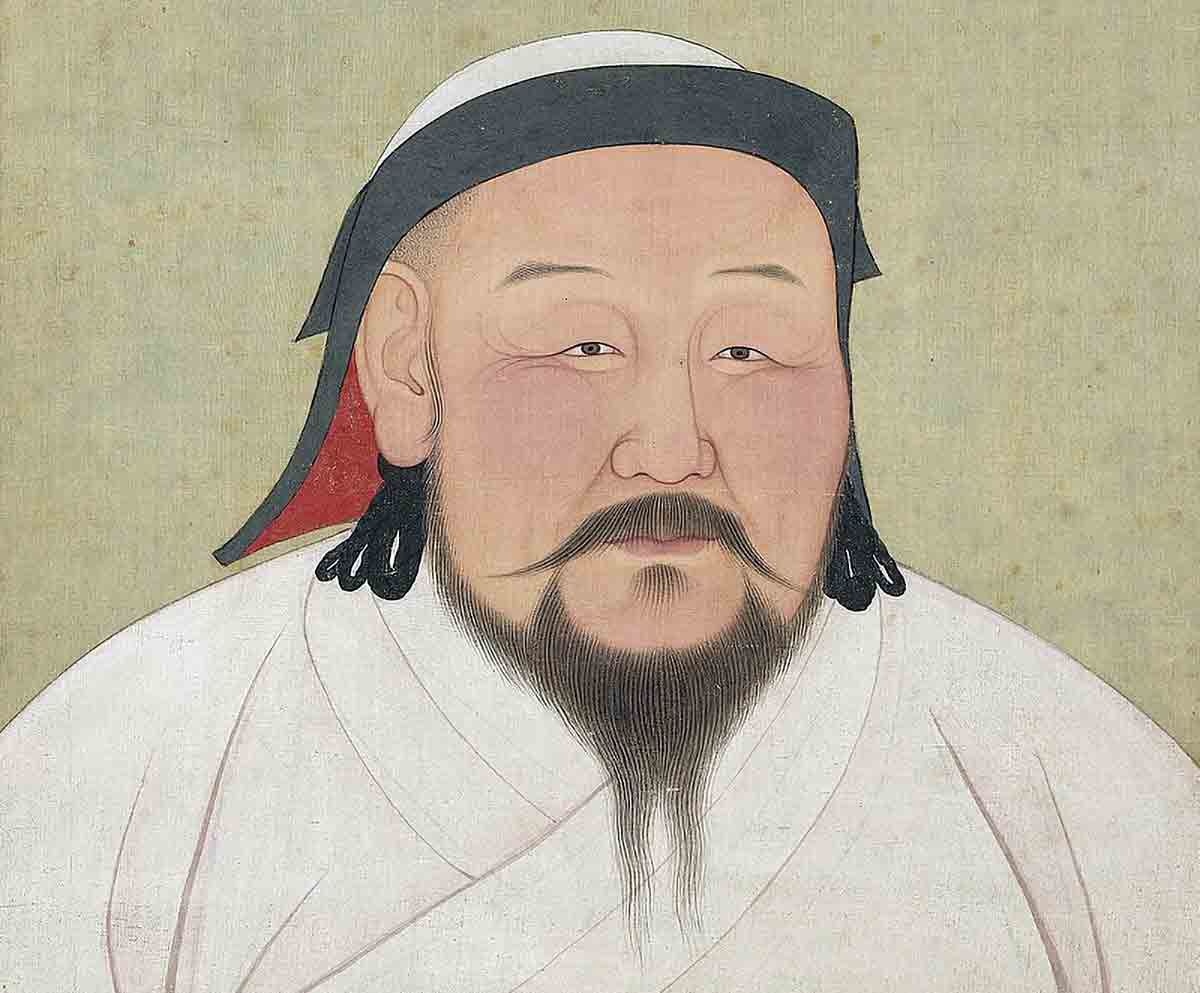
- Kublai Khan, who ruled China as the founder of the Yuan Dynasty, could be harsh as well. In 1280, he banned Islamic and Jewish slaughter methods, declaring the death penalty for anyone who killed animals in those ritual ways. He insisted that everyone under his rule must “eat the food of our dynasty.” Refusing to do so was seen as defiance. He extended the death penalty to circumcision, directly attacking core Jewish and Islamic practices. Kublai also restricted Daoist writings, allowing only the Daodejing (Tao Te Ching) and ordering certain religious institutions to pay taxes instead of granting them exemptions. He was far less generous with darqan privileges than earlier rulers.
So while some Mongol rulers protected and even favored religious institutions, others targeted them when they seemed politically dangerous or culturally non-compliant.
When the Mongols Themselves Converted
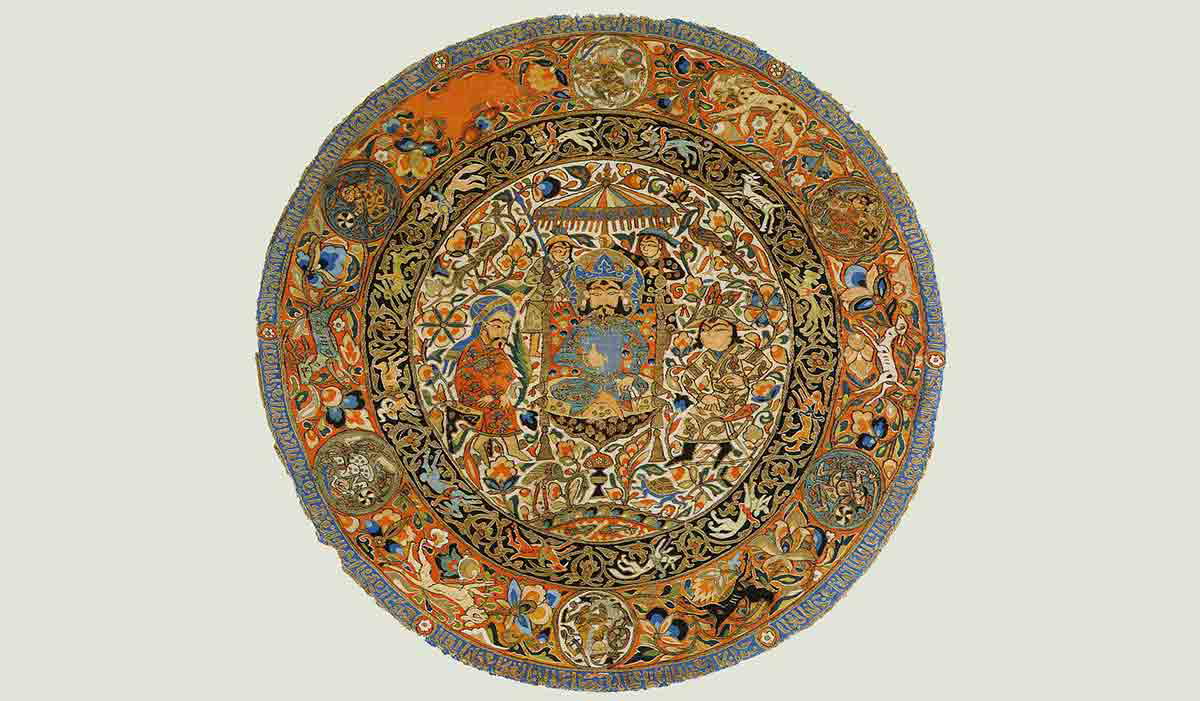
Over time, some Mongol elites went beyond toleration and actually converted to other religions.
- In western Asia, Mongol rulers in the Ilkhanate gradually became Muslim.
- Ghazan Khan, the seventh Ilkhan, converted to Islam in 1295. For him, it wasn’t just politics—sources suggest a real personal interest in the faith.
- The khans of the Golden Horde in Russia adopted Islam officially in the early 14th century.
- In East Asia, Kublai Khan embraced Tibetan Buddhism, while still retaining elements of Mongol Tengrism.
Conversion could improve relations with local populations or strengthen legitimacy. But even when they converted, Mongol rulers often blended their old beliefs with the new ones, rather than abandoning them completely.
Tolerant… But Only By Medieval Standards
So, were the Mongols religiously tolerant?
The answer is: yes and no.
- Yes, in the sense that the Mongol Empire was remarkably cosmopolitan. Multiple religions existed side by side, religious leaders sometimes enjoyed tax exemptions and legal protection, and several faiths could flourish under Mongol rule.
- No, if we measure them by modern ideas of religious freedom. Their policies:
- were selective,
- based on whether a religion fit Mongol ideas about heaven and power,
- and could be reversed whenever a ruler felt threatened or annoyed.
The Mongols did not promote a universal right to worship as you please. They promoted a system where certain religions and institutions were protected as long as they supported Mongol power, prayed for Mongol success, and fit into Mongol spiritual logic.
Even so, compared to many other medieval empires, the Mongols did create space for multiple religions to survive and sometimes thrive under one political umbrella. It wasn’t freedom of religion as we understand it today — but it was a form of toleration with limits, born from a mix of belief, pragmatism, and imperial strategy.

support our project
At History Affairs, we believe history belongs to everyone.
donateYour contribution helps us keep this global archive open, free, and growing — so people everywhere can learn from the past and shape a better future.
know the present
Defense Tech Needs the State, Not Less of It
Trump Era or The New Imperial Age
America First, Venezuela, and the Trap of Old Habits
Why the AI Race Has No Winner
reading more
The Enigmatic Journey of Mary of Nazareth: A Tale of Faith, Mystery, and Reverence
Anubis: Guardian of the Underworld and God of the Dead
Hampton Court Palace: Is King Henry VIII’s Residence Truly Haunted?
A Short History of Ball Games: From Olmec Rubber to Japanese Kemari
Five Descartes Quotes That Still Sharpen Your Mind
The Clash of Titans: Rome vs. Antiochus the Great
The United States and Political Intervention in Latin America
The Sophists, Socrates, and the Quest for Moral Clarity
Machiavelli, Luther, and the Rise of Modern Moral Thought
The Secret of the Black Chamber: How Letters Were Spied On in 18th-Century Europe
Inside a Japanese Castle
The Roman-Tamil Trade: How Pepper, Pearls, and Gold Shaped Southern India